
Cut first response time to seconds with an AI agent
 Communicate.so
First response time drops to seconds when an AI agent answers instantly. Where the hours hide, cut FRT, and measure it honestly.
TL;DR: First response time is the wait between a customer's first message and the first real reply from your side, and it is the metric customers feel before any other. Most of that wait is not work, it is queue time: a ticket sitting unread while your team sleeps, handles a spike, or triages a backlog. This guide shows where those hours actually hide and how to cut first response time to seconds without hiring a night shift. The lever is an AI agent grounded on your own data that answers the repetitive majority the moment a message arrives, routes the rest to the right person, and hands off cleanly when it is unsure. It also covers the honest part most vendors skip: how to measure FRT so an auto-reply does not flatter your numbers, and where night and weekend coverage really comes from. Get it right and customers stop waiting on answers you already have; get it wrong and a fast bot just delivers the wrong answer faster.
A customer does not measure your support by how well you eventually solve their problem. They measure it by how long they sat there wondering if anyone was coming. First response time is that wait, and it is the first judgment a customer makes about whether you are worth trusting.
The uncomfortable truth is that most of that wait is not real work. It is queue time: the ticket sits unread while your team is asleep, buried under a spike, or working through a backlog in the order it arrived. Cutting first response time is mostly about removing that dead time, not about typing faster, and an AI agent that answers the instant a message lands is the most direct way to remove it.
This guide is written for the person who owns the queue: a founder, a support lead, or an ops owner who has to answer for how long customers wait. It walks where the hours hide, how instant answers and triage shrink them, how a clean handoff keeps things fast when a person takes over, and how to measure FRT honestly so you are not fooled by your own dashboard. If you want the numbers behind the target, the first response time benchmark is the companion read, and this post is the how-to for getting there.
Where the hours actually hide in first response time
Before you can cut first response time, you have to see it honestly. FRT is the gap between a customer's first message and the first meaningful reply, and the reason it runs into hours is almost never that answers are hard to write. It is that the message waits in line before anyone reads it at all.
The first place hours hide is outside business hours. A message that arrives at 8pm on a small team waits until morning by default, so an eleven-hour clock starts before a single human is even awake. That one structural gap can dominate your average FRT, and no amount of daytime speed closes it, which is why 24/7 AI customer support changes the shape of the problem rather than just trimming it.
The second place is volume spikes. A launch, an outage, or a Monday morning produces more tickets than your team can read in real time, and the queue backs up. Every ticket behind the spike inherits the whole backlog as wait time, so FRT climbs fast even when each individual reply is quick once someone gets to it.
The third place is triage. On many teams a person has to read each message, decide how urgent it is, and route it before real work starts, and that reading-and-routing step is itself queue time. It is invisible on a report because it looks like the team was busy, but from the customer's side it is silence, and analytics that separate wait time from handle time are what make it visible.
The fourth place is the repeat question. A large share of tickets are variations of a few dozen things you have already answered a thousand times, and those sit in the same queue as the genuinely novel problems. Making a customer wait an hour for an answer that lives verbatim in your help docs is the purest form of avoidable delay.
Once you see FRT as mostly queue time, the fix follows. You do not need faster typists, you need to stop the wait, which means answering the repetitive majority the instant it arrives and getting the rest to the right person without a manual triage lap. The rest of this guide is those two moves, plus the discipline to measure whether they actually worked, a discipline the NIST AI Risk Management Framework frames as making a system's behavior measurable and accountable rather than assumed.
Instant answers: the fastest way to cut FRT
 Communicate.so
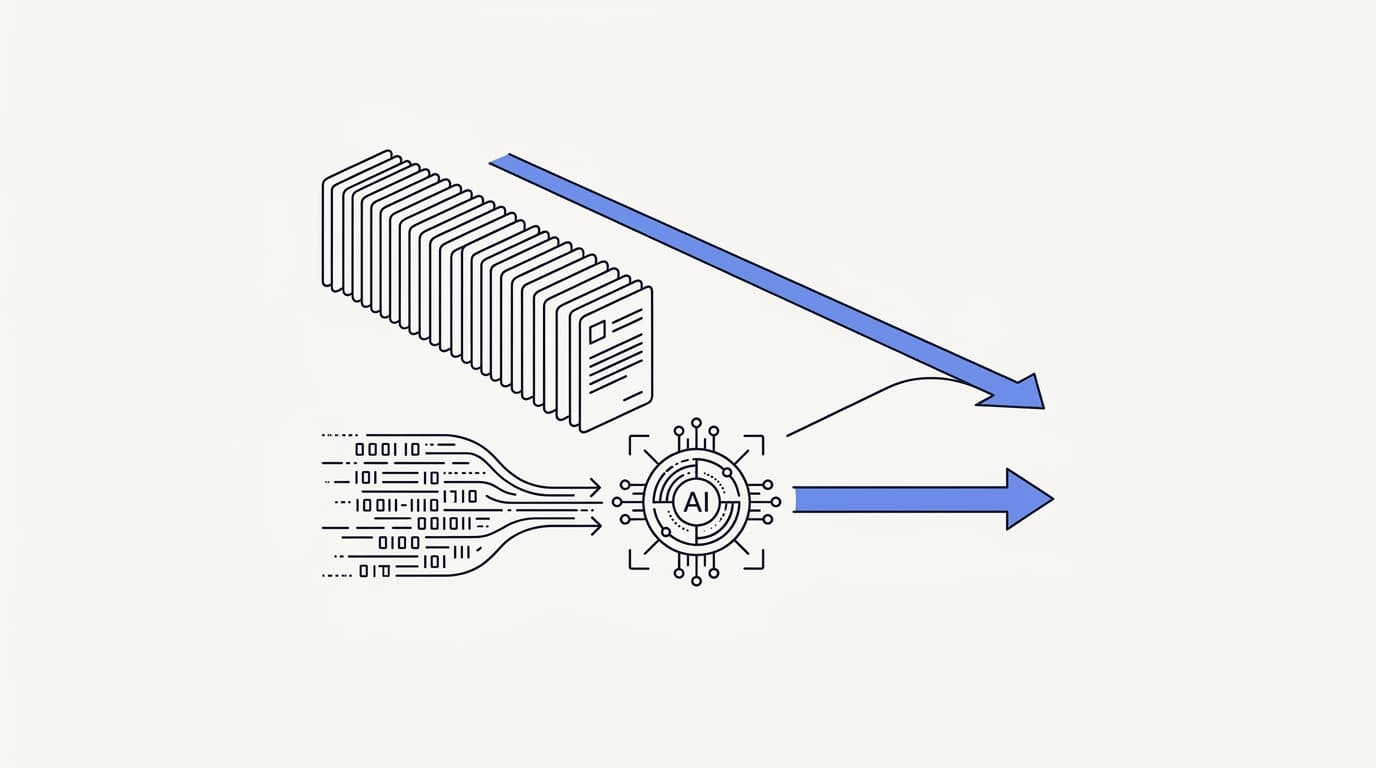
The single biggest lever on first response time is answering common questions instantly. An AI agent grounded on your own data reads the message, retrieves the relevant passage from your content, and replies the second it arrives, at any hour, with no queue in front of it. For the large slice of tickets that are documented and repetitive, the wait goes from hours to seconds.
The mechanism that makes this safe is grounding. A grounded agent answers only from the documents you connect, retrieving the right passage at answer time rather than generating from the model's general knowledge. When retrieval finds nothing relevant, it has nothing to say and should hand off, which is exactly the behavior that keeps instant from meaning wrong.
Speed without grounding is a trap, and the evidence is blunt. RAND's 2025 review of more than 2,400 enterprise AI initiatives found roughly 80% failed to deliver measurable value, mostly on operational discipline rather than model quality (RAND). In support, operational discipline mostly means grounding and the content behind it, because a fast agent that invents a refund window has made your FRT better and your support worse at the same time.
The questions to target first are the ones that are documented, high-frequency, and low-risk. Password resets, order status, billing basics, plan differences, and how-to steps are the classic set, and they usually make up the bulk of the queue you are trying to relieve. Starting there gives you the biggest FRT drop for the least risk, because these answers already exist and rarely go wrong.
This is also where the customer's expectation has moved. People now expect near-instant answers to routine questions and get frustrated waiting for something they assume a machine could handle, a shift the Nielsen Norman Group has documented in its work on response-time perception. Meeting that expectation on the routine majority is what buys you patience on the harder cases that genuinely need a person.
Instant answers also compound. Every repeat question the agent absorbs is one your team never sees, so the human queue gets shorter and the tickets left in it get faster replies too. The FRT win is not only on the deflected tickets, it is on everything behind them that no longer waits for the team to clear the easy stuff first.
Triage: routing so the right questions get answered first
 Communicate.so
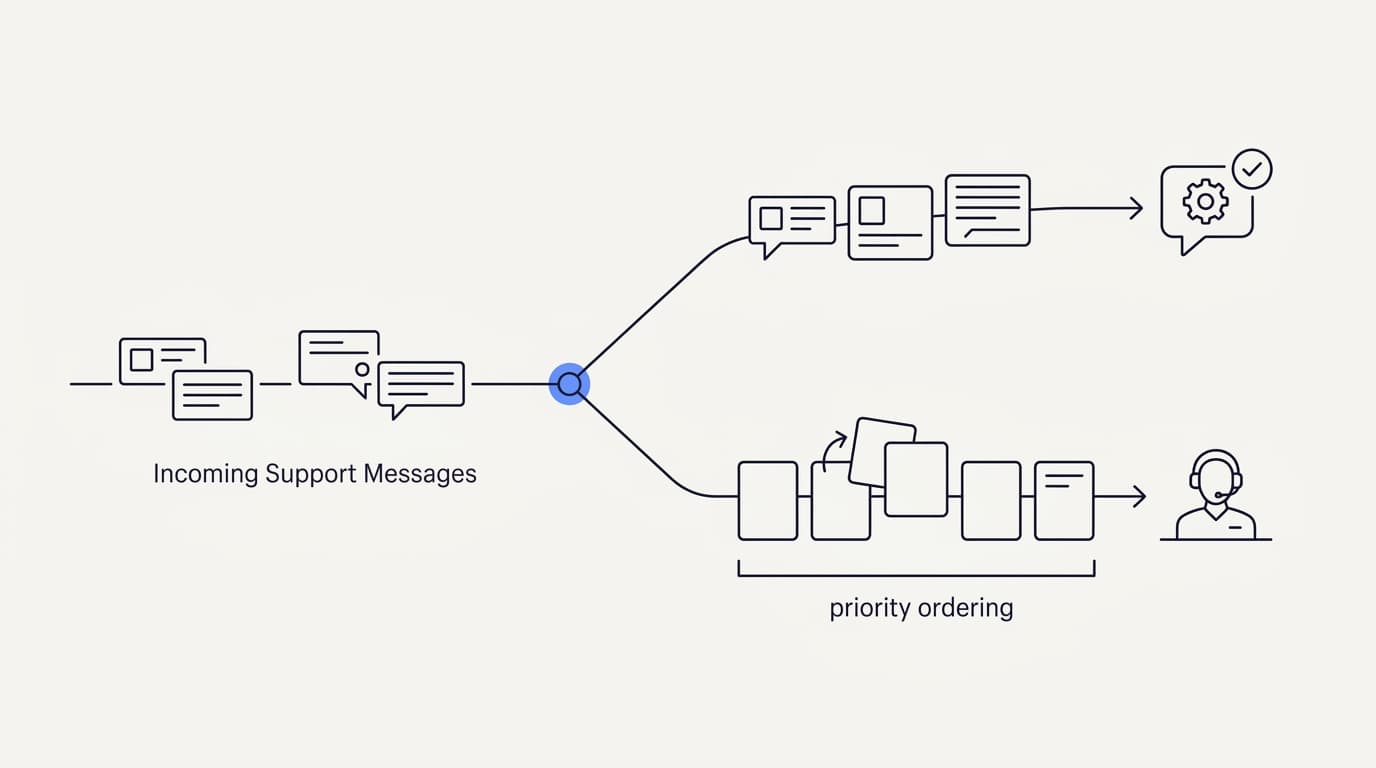
Instant answers handle the questions the agent can own; triage handles the rest. Triage is deciding, for every incoming message, whether the agent answers it or a person does, and if a person, which one and how urgently. Done by hand it is pure queue time, and done by the agent it happens the moment the message arrives.
The agent does the first pass automatically. It answers what it can ground, and for everything else it tags the conversation, captures the context, and routes it toward the right person instead of leaving it in an undifferentiated pile. That turns a flat first-in-first-out queue into a sorted one, where the urgent and the human-only rise to the top rather than waiting behind a stack of easy questions.
Good triage is as much about what the agent refuses as what it answers. Sensitive complaints, disputes, cancellations with retention stakes, and anything legal or financial with real consequence should route to a person from the first message, not get an improvised reply. Writing that out-of-scope list down is what lets you configure the handoff to move those away cleanly, so the human sees them fast instead of finding them later in a mess.
Triage also fixes the priority problem that inflates FRT during spikes. When a hundred messages land at once, a person reading them in order makes the hundredth customer wait for the ninety-nine ahead, regardless of urgency. An agent that sorts on arrival lets a genuine emergency jump the line while it absorbs the routine questions itself, so the wait lands where it does least damage.
The result is a shorter, cleaner human queue, and that shows up in a second metric beyond FRT. When your team only sees the tickets that actually need judgment, they resolve each one faster, which is the average handle time story running alongside the first-response one. Faster first replies and faster resolutions come from the same act of taking the repetitive majority off the queue.
None of this requires a rules engine you tune for a month. The agent's scope and your out-of-scope list do most of the sorting, and the tags it applies give your team a queue they can read at a glance. Start with a few clear routes, watch where they misfire, and tighten from there rather than trying to model every case up front.
The routing decision comes down to a simple split you can write out in advance. The table below sorts common message types into what the agent answers instantly and what should route to a person, so you can see where the first-response win comes from and where the human queue stays busy.
| Message type | Agent answers instantly | Route to a human |
|---|---|---|
| Documented, repetitive FAQ | ✓ | ✗ |
| Order status or account lookup | ✓ | ✗ |
| Password reset or how-to step | ✓ | ✗ |
| Policy or plan-difference question | ✓ | ✗ |
| Sensitive complaint or dispute | ✗ | ✓ |
| Cancellation with retention stakes | ✗ | ✓ |
| Legal, financial, or safety-critical case | ✗ | ✓ |
| Question with nothing grounded to answer from | ✗ | ✓ |
Read the table as a starting split, not a fixed law. The instant-answer rows are where FRT drops to seconds, and the route-to-human rows are where a fast, context-rich handoff matters most. As your content grows and your testing shows the agent is reliably right on more topics, you widen the instant column on evidence rather than optimism.
The handoff: staying fast when a human takes over
 Communicate.so
A fast first reply means nothing if the handoff to a human is slow or clumsy. The moment the agent escalates, the clock on the customer's experience keeps running, so the handoff has to preserve speed, not reset it. That means the person who takes over starts with the full conversation, not a cold restart that makes the customer explain everything again.
The failure to avoid is the double wait. The agent replies instantly, the customer asks a follow-up it cannot handle, and then the conversation drops into a queue where it waits again for a human who has no context. You have delivered a fast first response and a slow real one, and the customer remembers the second wait more than the first.
The mechanism that keeps a handoff fast is a shared inbox where the AI and the human work the same thread. In Communicate, the Shared Inbox uses presence-based human takeover: when a teammate opens a conversation, the agent steps back automatically, with a per-turn backstop so the AI never talks over a person mid-reply. Nothing is rebuilt from scratch, because every message, AI or human, lives in the same transcript.
The reason this matters for FRT is that a handoff is a first response too, from the customer's point of view. If they asked a new thing when the human took over, the human's reply is the first response to that thing, and it is on the same clock. A handoff that carries context lets that reply come fast, because the person is answering rather than reconstructing.
Repeating yourself is one of the loudest complaints in all of support. Zendesk's 2024 CX Trends research found 74% of customers rank having to repeat information among their biggest frustrations (Zendesk). A handoff that preserves the thread removes that frustration and the delay that comes with it, which is why the AI to human handoff is a speed feature as much as a quality one.
Set your escalation to fail toward a human, not toward another agent guess. When the agent is on the boundary between answering and escalating, the safer default is to escalate, because a wasted human minute costs far less than a fast wrong answer to an already-waiting customer. You can tighten the triggers later, once your measurement shows the agent is reliably right inside its scope.
Measuring first response time honestly
 Communicate.so
You cannot cut what you measure dishonestly, and FRT is easy to fake. The most common self-deception is counting an automated acknowledgment as the first response. If a canned we got your message note stops the clock, your FRT looks great and your customer still has no answer, so the number improves while the experience does not.
The honest definition counts the first meaningful reply, the one that actually moves the customer forward. For an agent-answered ticket that is the grounded answer itself, which is genuinely instant. For an escalated ticket it is the first real reply from the person, not the routing message, because that is the moment the customer gets something they can use.
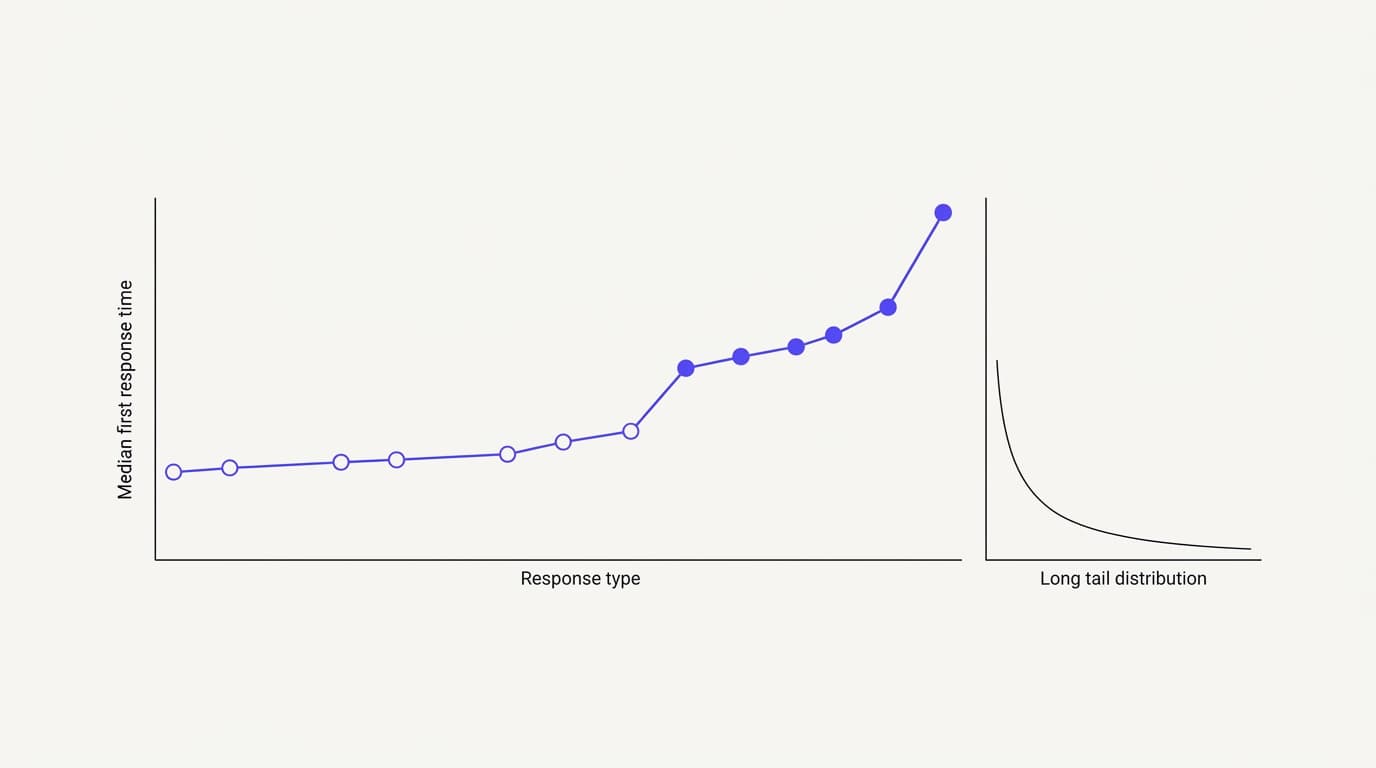
The second measurement trap is the average. A mean FRT hides a bad tail, because a pile of instant agent answers can drag the average down while a handful of customers wait hours behind a spike. Track the median and a high percentile together, and watch them by channel in your analytics, because the customers in the slow tail are the ones who churn and leave the angry reviews.
Segment by channel, because they behave differently. A web widget conversation carries a different expectation than an email, and blending them into one FRT number hides where you are actually slow. Measuring the widget, live chat, and email separately tells you which surface needs the work, rather than averaging a fast channel and a slow one into a meaningless middle.
The Harvard Business Review's long-running work on response speed makes the stakes plain: how fast you respond shapes whether a lead or a customer stays engaged at all (Harvard Business Review). The point of measuring FRT honestly is not a prettier dashboard, it is knowing whether the customers who matter most are getting a real answer fast, or an empty acknowledgment that quietly makes the metric lie.
Set your target before you read the results, and set it on the honest number. A reasonable bar is near-instant first responses on everything the agent can ground, and a firm ceiling on the slow tail for escalated tickets, judged on the median and a high percentile rather than the flattering mean. Deciding the threshold in advance keeps you from talking yourself into a number that looks good and means little.
Night and weekend coverage without a night shift
The biggest single chunk of first response time hides in the hours no one is working. For most small teams, nights and weekends are a coverage gap where every message waits until the next business morning, and that gap alone can be the largest term in your FRT. Closing it is where instant answers pay off most, because the alternative is hiring people to sit awake.
An AI agent grounded on your data does not keep hours. It answers the repetitive majority at 3am on a Sunday exactly as it does at 3pm on a Tuesday, so a customer in a different time zone gets a real answer instead of an eleven-hour wait. For documented questions, the coverage gap simply closes, without a rota or a night differential.
The honest limit is what happens to the questions the agent cannot answer overnight. It should not pretend, it should acknowledge the limit, gather context, and queue the conversation for the team with everything they need to reply first thing. That is the refusal-and-handoff pattern again, applied to time: the agent covers what it can ground and hands the rest forward cleanly, a division the 24/7 AI support guide breaks down in full.
This reframes what off-hours coverage even means. You are not promising a human answer at every hour, you are promising an instant answer to the routine majority and a fast, context-rich human reply to the rest as soon as the team is back. For most customers with most questions, that is indistinguishable from round-the-clock staffing, at a fraction of the cost.
The ceiling here is high when it is built on grounding rather than guessing. Gartner has projected that by 2029, agentic AI will autonomously resolve 80% of common customer service issues without human intervention (Gartner). Most of that resolution is exactly the documented, repetitive traffic that clogs an overnight queue, which is why night and weekend coverage is where an AI agent earns its keep on first response time.
Watch the off-hours numbers as their own segment. If your overnight FRT is instant on agent-answered tickets and your morning backlog of escalated ones clears fast, the coverage gap is closed in the way that matters. If the morning backlog is slow, that is a staffing or triage fix, not a reason to distrust the overnight instant answers that are already working.
Where Communicate fits, honestly
Communicate is built to cut first response time by removing queue time, not by promising a bot that answers everything. The agent grounds answers in your connected data and replies instantly, hands off when it is unsure, and the Shared Inbox uses presence-based human takeover with a per-turn backstop so a fast handoff never turns into the AI talking over a person. If you want an agent with no limits, it is not the tool for you, and that is deliberate.
Here is what it does without embellishment. The live channels are a web widget, live chat, and email, with in-app messages, analytics, and scoped actions running from the same agent and knowledge base, so first-response behavior stays consistent across every surface. There is no WhatsApp, Messenger, SMS, or voice, so if any of those is a hard requirement, it is not your best fit today.
Analytics surface the numbers this guide argues for, including first response time and resolution metrics, so you can watch the median and the slow tail by channel rather than trusting a flattering average. You can drop the agent onto your site in minutes with embeddable widgets, and the same agent that answers the widget answers live chat and email, so the FRT win is not siloed to one channel.
On the model, Communicate runs a single model, gpt-4o-mini through OpenRouter, with response and prompt caching to keep cost and latency down. That is a deliberate choice, because the data you connect and the grounding around it drive answer quality and speed far more than swapping models does. Caching also helps first response time directly, by keeping the instant answers genuinely instant under load.
On pricing, there is no free tier. Entry is a one-time $1 activation that confirms you are a real person and includes 100 test credits, then credit-based usage from there, which keeps support cost tracking usage rather than headcount. Spend those test credits measuring FRT the honest way described above, on your own real questions, before you trust the agent live.
Now the honest limits. Communicate is GDPR-ready but not certified, holds no SOC 2, HIPAA, or ISO 27001, runs in a single region, and does not offer SSO. It supports TOTP two-factor authentication, encryption at rest, and workspace isolation, a posture stated plainly rather than dressed up.
Questions go to [email protected].
Key takeaways
- First response time is mostly queue time, not work time, so cutting it means removing the wait, not typing faster.
- An AI agent grounded on your data answers the repetitive majority instantly, which is the single biggest lever on FRT and the one that compounds by shrinking the human queue.
- Triage on arrival sorts what the agent answers from what a person handles, so urgent and human-only tickets stop waiting behind easy questions.
- A fast first reply is wasted if the handoff is slow, so preserve the full thread in a shared inbox and let the human answer rather than reconstruct.
- Measure FRT honestly on the first meaningful reply, track the median and the slow tail by channel, and close the night and weekend gap with instant answers rather than a night shift.
Ready to cut first response time to seconds on the questions you already have answers for? Start with a one-dollar account activation that includes 100 test credits, connect your data, and measure FRT the honest way before you commit. If you want the target behind the effort, the first response time benchmark and the average handle time reduction guides are the right next reads.
Frequently asked questions
What is first response time?
First response time, or FRT, is the gap between a customer's first message and the first meaningful reply from your side. It is the metric customers feel before any other, because it is how long they sit wondering if anyone is coming. The key word is meaningful: an automated acknowledgment that gives no real answer does not count as a first response in an honest measurement.
How do I cut first response time?
The most direct way is to remove queue time by answering common questions instantly with an AI agent grounded on your data, so documented tickets get a real reply the second they arrive. Then triage the rest on arrival so urgent and human-only cases do not wait behind easy ones. Most of FRT is dead time in a queue, so cutting it is about stopping the wait rather than working faster.
Why is first response time so important?
Because it is the first judgment a customer makes about whether you are reliable, formed before you have solved anything. The Harvard Business Review's work on response speed shows how fast you reply shapes whether someone stays engaged at all (Harvard Business Review). A slow first response tells the customer they are not a priority, which colors the whole interaction even if you solve the problem well later.
What is a good first response time?
It depends on the channel and your customers' expectations, so the honest answer is to set your own target on your own data rather than copy a headline number. Aim for near-instant on everything the agent can ground, and a firm ceiling on the slow tail for escalated tickets. The first response time benchmark covers how to think about the target without treating any single number as a universal fact.
Does an AI agent actually cut first response time?
Yes, for the large share of tickets that are documented and repetitive, because a grounded agent answers those the moment they arrive with no queue in front of it. It also shortens the human queue by absorbing that traffic, so the tickets left for people get faster replies too. The win is only real when the agent is grounded, because a fast wrong answer helps the metric and hurts the customer.
What does grounding mean and why does it matter for speed?
Grounding means the agent answers only from the documents you connect, retrieving the relevant passage at answer time rather than generating from general knowledge. It matters for speed because it lets you make instant answers safe: the agent replies fast on what it can ground and hands off on what it cannot. Speed without grounding just delivers invented answers faster, which is worse than a slow correct one.
How does triage reduce first response time?
Triage sorts incoming messages the moment they arrive, so the agent answers what it can and routes the rest to the right person by urgency instead of a flat first-in-first-out queue. That stops an emergency waiting behind a stack of easy questions during a spike. It also feeds a cleaner queue to your team, which is the average handle time win running alongside the first-response one.
What happens when the AI cannot answer a question fast?
It should refuse rather than guess, acknowledge the limit, gather context, and route the conversation to a human through the shared inbox. The handoff carries the full thread so the person answers fast instead of asking the customer to repeat everything. A clean refusal-and-handoff keeps first response time honest, because it turns a question the agent cannot handle into a fast human reply rather than a slow wrong one.
Does a fast first response mean a fast resolution?
Not always, and conflating the two hides a real problem. An agent can reply instantly and then a follow-up it cannot handle drops into a slow human queue, so the first response was fast and the real answer was not. The fix is a context-preserving handoff, so the human's first reply to the new question is also fast, keeping both clocks short.
How do I measure first response time honestly?
Count the first meaningful reply, not an automated acknowledgment, and track the median with a high percentile rather than only the mean. Watch the numbers by channel in your analytics, because a fast channel and a slow one average into a meaningless middle. The customers in the slow tail are the ones who churn, so a flattering average that hides them is the metric lying to you.
Why should I use median instead of average FRT?
Because a mean hides a bad tail. A pile of instant agent answers drags the average down while a handful of customers wait hours behind a spike, so the average looks healthy and those customers are furious. The median tells you the typical experience and a high percentile tells you the worst common one, and watching both together is what keeps the slow tail from disappearing.
Does an auto-reply count as a first response?
Not in an honest measurement. A canned we got your message note stops the clock without giving the customer anything they can use, so counting it makes your FRT look great while the experience is unchanged. The honest number counts the first reply that actually moves the customer forward, which for a grounded agent answer is genuinely instant and for an escalation is the first real human reply.
How does an AI agent handle nights and weekends?
It answers the repetitive majority at any hour, because a grounded agent does not keep business hours, so the overnight coverage gap that usually dominates FRT simply closes for documented questions. Questions it cannot ground get acknowledged and queued for the team with full context for a fast morning reply. The 24/7 AI support guide breaks down how that covers off-hours without a night shift.
Can I cut first response time without hiring more people?
Yes, and that is the main point of using an AI agent for it. Most of FRT is queue time, and instant answers plus triage remove that time without adding headcount, especially in the nights and weekends where hiring is most expensive. You keep people for the judgment calls and the sensitive conversations, where their time is worth far more than clearing repeat questions.
Which channels does an instant answer work on?
In Communicate, the same grounded agent answers the web widget, live chat, and email, so the first-response win is consistent rather than siloed to one surface. You can add the agent to your site quickly with embeddable widgets. There is no WhatsApp, Messenger, SMS, or voice, so if any of those is a hard requirement, the instant-answer coverage does not extend to it today.
Will cutting FRT hurt answer quality?
Only if you cut it by letting the agent guess, which is why grounding and refusal come first. A grounded agent is fast because the answer already exists in your content, not because it is rushing, and it hands off rather than inventing when it does not know. Speed and quality only trade off when you skip the guardrails, so the discipline is to make instant answers safe, not to slow good ones down.
How does the handoff keep things fast?
A shared inbox where the AI and human work the same thread means the person taking over starts with the full conversation, not a cold restart. In Communicate the Shared Inbox uses presence-based takeover with a per-turn backstop, so the AI steps back automatically and never talks over the human. That preserves speed because the human answers the customer's new question rather than spending time rebuilding context, which is the handoff done right.
Does Communicate report first response time?
Yes. The analytics surface first response time and resolution metrics, so you can watch the median and the slow tail by channel rather than trusting a single average. That lets you measure FRT the honest way this guide describes, and spot the channel or the off-hours segment that needs the work, instead of averaging a fast surface and a slow one into a number that hides both.
How much does it cost to try this?
There is no free tier. Entry is a one-time $1 activation that confirms you are a real person and includes 100 test credits, then credit-based usage from there, so support cost tracks usage rather than headcount. A sensible way to spend the test credits is measuring first response time on your own real questions before you trust the agent live, which is the honest test this guide argues for.
What are the honest limits of using Communicate for this?
It cuts first response time on grounded questions across the web widget, live chat, and email, but it does not cover WhatsApp, Messenger, SMS, or voice. It is GDPR-ready but not certified, holds no SOC 2, HIPAA, or ISO 27001, runs in a single region, and does not offer SSO, though it supports TOTP two-factor authentication, encryption at rest, and workspace isolation. That posture is stated plainly on the product, and questions go to [email protected].