
Gorgias alternative: order-action depth versus general knowledge depth
 Communicate.so
A Gorgias alternative comparison for ecommerce teams: where order-action depth wins, which store profiles should stay, and where broader knowledge grounding wins.
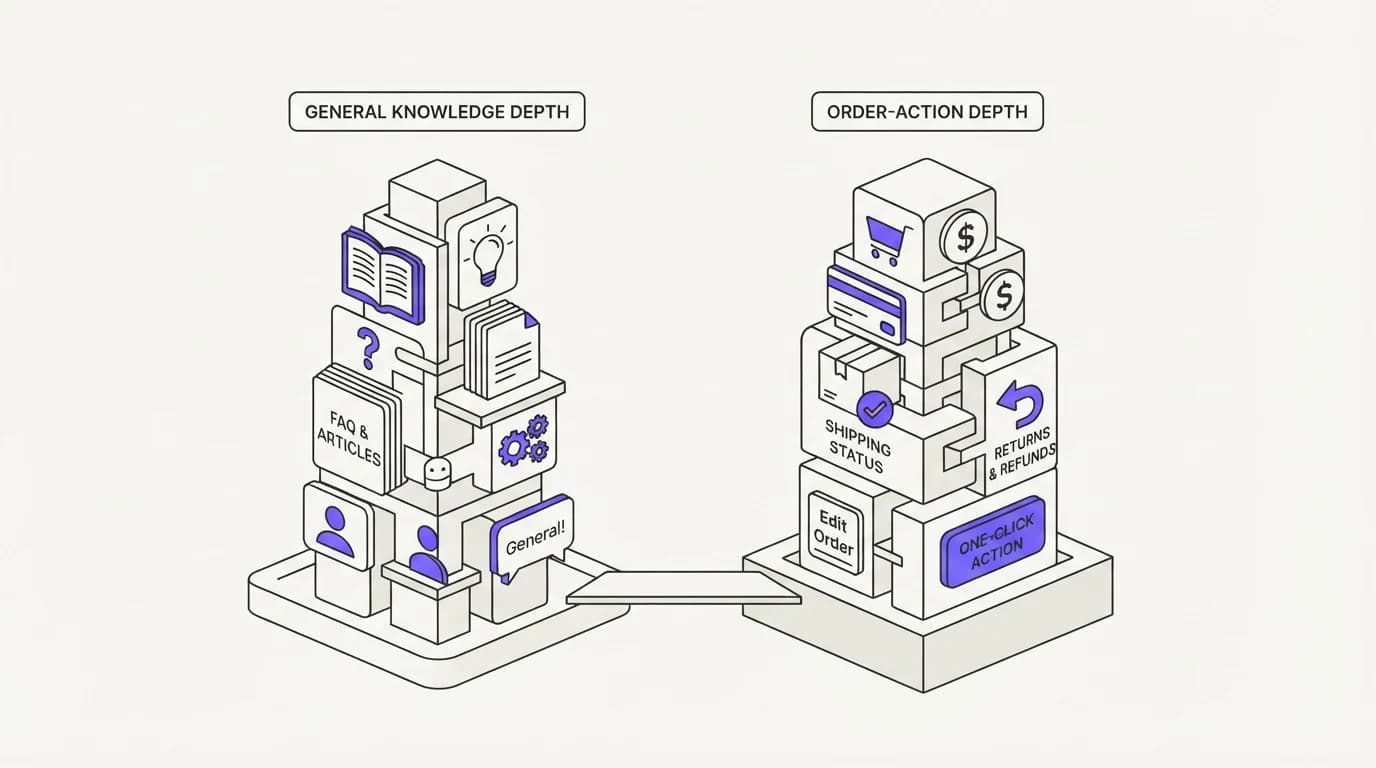
TL;DR: Gorgias is built ecommerce-native, with order lookups, refunds, and subscription edits wired directly into the inbox through deep Shopify and other platform integrations. That order-action depth is genuinely hard to replicate, and this guide names plainly which store profiles should stay on Gorgias because of it. The honest comparison against a broader AI-first alternative like communicate.so is not features, it is a trade between action depth on commerce platforms and knowledge depth across everything else a customer might ask. A store whose ticket volume is dominated by order status, refunds, and subscription changes gets more value from Gorgias's action integrations than from wider retrieval. A store fielding varied product, policy, and how-to questions alongside order actions may find a broader knowledge agent closes gaps Gorgias's action-first design leaves open. This guide walks through both cases with a real comparison, not a blanket recommendation.
Gorgias built its reputation on one specific thing: wiring customer support directly into commerce platforms so an agent, human or AI, can look up an order, issue a refund, or edit a subscription without leaving the inbox. That is a real and specific strength, and any honest alternative comparison has to start there rather than argue it away.
The question this guide answers is narrower than a generic feature comparison. It is whether your store's ticket mix leans toward order actions, where Gorgias's depth is hard to beat, or toward general product and policy knowledge, where a broader retrieval approach closes gaps an action-first tool leaves open. The WhatsApp AI customer support guide is a useful companion if your store also runs support over messaging channels.
This is written for an ecommerce support lead who already knows Gorgias's Shopify integration and wants the honest version of the trade-off. It names which store profiles should stay on Gorgias, where a general-knowledge AI agent adds coverage Gorgias does not, and how communicate.so approaches the same problem differently.
What Gorgias actually is
Gorgias is a helpdesk built specifically for ecommerce, with its core differentiator being deep, native integrations into commerce platforms, most notably Shopify. Instead of a general ticketing tool bolted onto a store, Gorgias treats order data, customer purchase history, and platform actions as first-class objects inside every conversation.
That design shows up in what an agent sees the moment a conversation opens: order status, shipping details, and past purchases sit next to the message, without a separate lookup. You can review the current integration list directly on Gorgias's site rather than take a third-party summary of platform coverage.
Gorgias also supports macros and automation rules tuned for common ecommerce scenarios, like a shipping delay or a return request, which is a natural fit for stores whose ticket categories repeat in predictable, commerce-specific ways.
The product grew up alongside Shopify's merchant ecosystem specifically, and that history shows in how deeply order data threads through the interface rather than sitting in a separate tab. A support agent on Gorgias rarely has to leave the conversation to check a fact the platform already holds, which is a different design goal from a general-purpose inbox that treats commerce data as one integration among many.
Gorgias also reports revenue generated through support conversations, treating a resolved return or upsell reply as a measurable commerce outcome rather than just a closed ticket. That framing is specific to ecommerce and is not something a general knowledge-first support tool sets out to measure in the same way.
Order-action depth: the strength that defines Gorgias
 Communicate.so
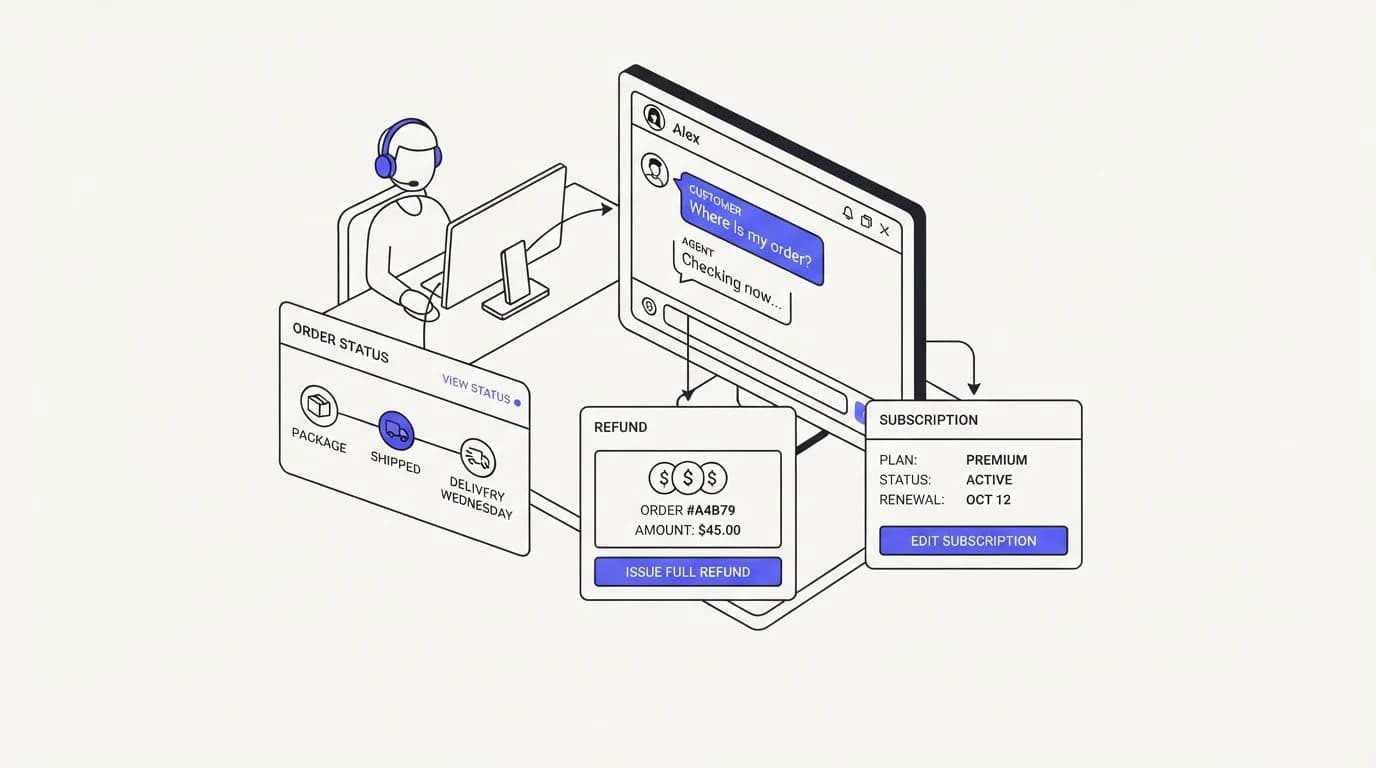
Order-action depth is the right term for what Gorgias actually sells, and it is worth being precise about it. A refund is not a knowledge-base answer; it is a write to a payment system. A subscription edit is not a policy explanation; it is a change to a live record.
Gorgias wires those actions directly into the inbox rather than treating them as a separate workflow.
This matters because a support agent, human or AI, that can only explain a refund policy but cannot issue the refund has solved half the customer's problem. Gorgias's native platform integrations close that gap for the commerce actions it supports, which is a meaningfully different capability from answering a question well.
An agent framework that supports scoped actions can, in principle, close the same gap by connecting to the same commerce systems. The difference is maturity and breadth: Gorgias has built and tuned these integrations specifically for ecommerce platforms over years, while a general-purpose action framework requires you to wire up the specific write operations your store needs.
Consider what each write operation actually requires before treating them as interchangeable. A refund needs the right permissions, an idempotency check so a retried request does not double-refund a customer, and a confirmation step for anything above a set amount. Gorgias ships that logic already tuned for commerce platforms; a general actions framework asks you to design it, which is real work but also real control over exactly how cautious the agent is.
Gorgias vs communicate.so: a side-by-side comparison
The table below compares the two on the dimension this guide keeps returning to: how deep the commerce action integration goes versus how broad the knowledge grounding is.
| Dimension | Gorgias | communicate.so |
|---|---|---|
| Native Shopify and ecommerce platform integrations | ✓ | ✗ |
| Order lookup, refunds, subscription edits built in | ✓ | Via configured actions |
| Ecommerce-specific automation rules and macros | ✓ | ✗ |
| Broad knowledge retrieval across multiple content sources | Limited | ✓ |
| General product and policy question coverage | Limited | ✓ |
| Pricing unit | Per conversation tier | Usage-based credits |
| Shared inbox with human takeover | ✓ | ✓ |
| Voice and SMS channel support | ✓ | ✗ |
| Free tier or trial | ✗ | ✗ |
The table's honest reading is that Gorgias wins decisively on the commerce action rows, and communicate.so's actions model needs deliberate configuration to reach the same depth. On general knowledge coverage, the pattern reverses, which is the trade-off the rest of this guide walks through in practical terms.
Voice and SMS support are worth a separate note, since some ecommerce stores lean on both for order-status updates and delivery alerts. Gorgias covers those channels natively, while communicate.so today covers a web widget, live chat, email, and in-app messages, so a store with a phone-heavy support line should weigh that gap on its own before deciding.
Which store profiles should stay on Gorgias
 Communicate.so
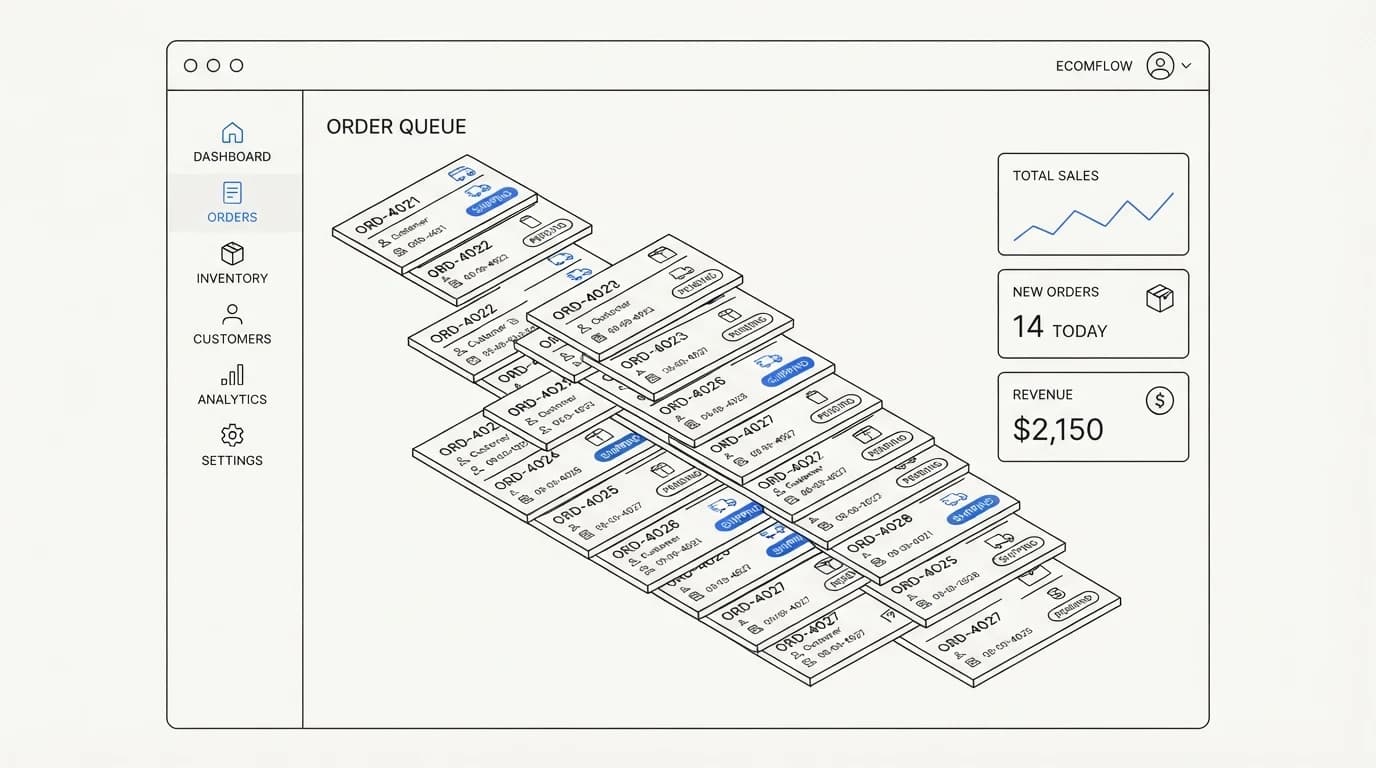
This section names the case for Gorgias directly, because a comparison that hedges on this is not useful to a real buyer. If your ticket queue is dominated by order status, refund requests, and subscription changes on a supported commerce platform, Gorgias's native integrations are doing real, hard-to-replicate work, and switching away trades that depth for coverage you may not need.
Stores running high-volume flash sales or subscription boxes, where shipping delays and billing edits spike predictably, benefit from Gorgias's automation rules built specifically for those patterns. That tuning took years to mature and is not something a general knowledge agent replicates out of the box.
Stores with a narrow, stable product catalog and a support volume that rarely strays from order status and returns are the cleanest version of this profile. There is very little knowledge surface for a broader agent to add value on, and the entire cost of switching would buy coverage the store does not actually need.
Stores already deep into the Gorgias and Shopify ecosystem, with macros, automation rules, and staff habits built around it, also have real switching costs that should weigh heavily in this decision. If most of your support volume is genuinely order actions rather than product or policy questions, staying on Gorgias is the honest recommendation, not a hedge.
A useful gut check is whether a customer's question could be answered correctly by looking only at their order record, without touching a product page, policy document, or FAQ. If most of your queue passes that test, the order data itself is doing almost all the work, and that is precisely the workload Gorgias's platform integrations were built to carry.
General knowledge depth: where a broader AI agent wins
Order actions are not the only thing customers ask an ecommerce store, and this is where an action-first design shows its limits. Product questions, sizing and fit, ingredient or material details, warranty terms, and policy nuance are knowledge questions, not order actions, and they need a different kind of grounding to answer well.
A store with a wide product catalog, frequent product launches, or complex policy variations across regions accumulates a knowledge surface that a commerce-action-first tool was not built to cover deeply. Connecting a broader set of data sources, product documentation, FAQs, and policy pages, alongside order-action capability closes that gap directly.
Grounding quality here follows the same pattern documented across the industry. Twig's review of AI support complaints names poor context awareness and hallucinated answers among the top failure modes (Twig), and both failures trace back to an agent answering outside what its connected content actually supports. A store whose real ticket mix is knowledge-heavy needs that content coverage more than it needs deeper order-write access.
The two needs are not mutually exclusive in principle. A store can want both deep order actions and broad knowledge grounding, and the honest limitation today is that no single tool in this comparison fully delivers both at the maturity Gorgias brings to commerce actions and a knowledge-first agent brings to retrieval.
A store selling apparel, supplements, or anything with sizing, dosage, or material variation tends to accumulate this knowledge surface fastest, because every product variant is a new set of questions a fixed order-action script cannot answer. A store selling a single simple product with little variation accumulates it far more slowly, and its case for broader grounding is correspondingly weaker.
The failure mode to watch for is an agent that answers a product question with the same confidence it uses for an order lookup, when only one of those answers is backed by a verified system of record. CMSWire found the share of organizations reporting a negative consequence from generative AI rose from 44% in 2024 to 51% in 2025 (CMSWire), a trend that tracks closely with agents deployed past the edge of what their content actually supports.
Pricing: conversation-based billing versus usage-based credits
 Communicate.so
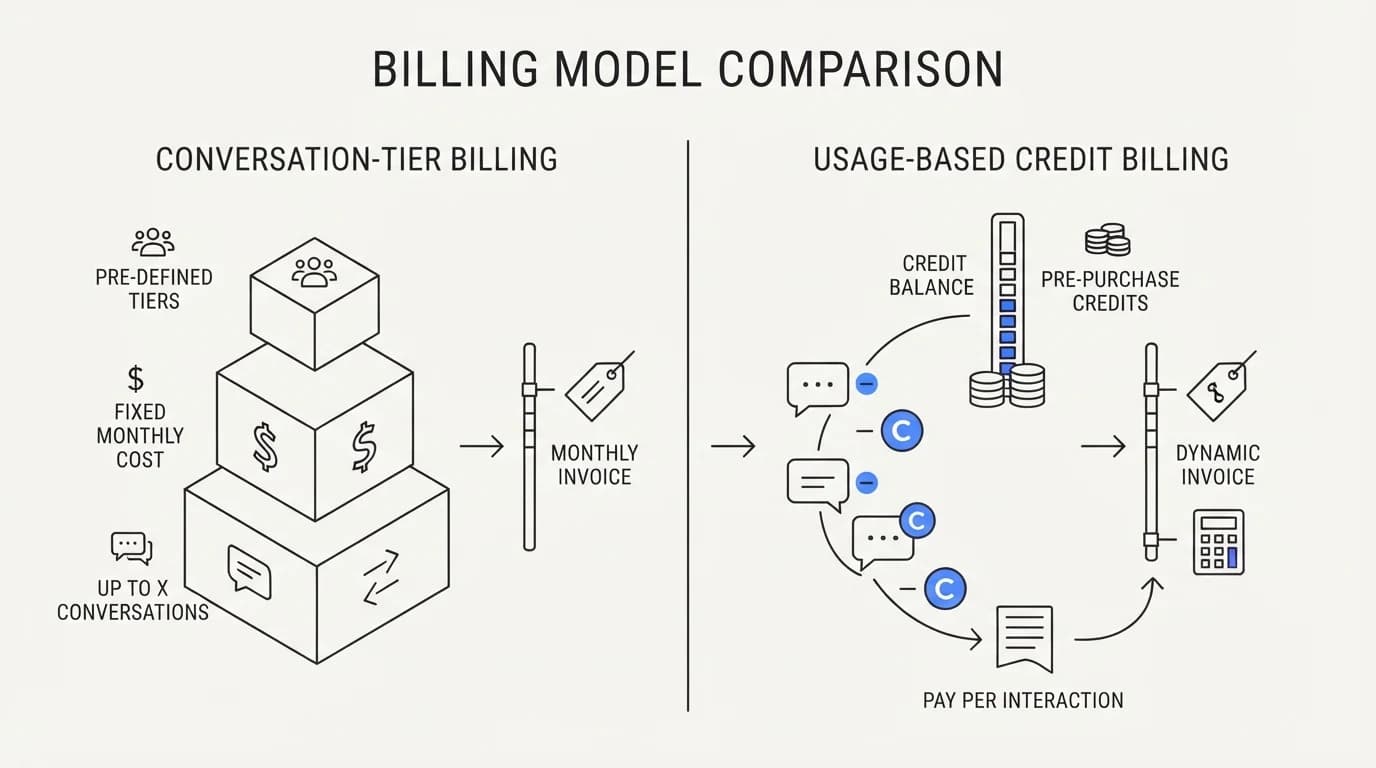
Gorgias prices around conversation volume tiers, which ties cost to how many customers reach out, regardless of whether the contact is a five-second order lookup or a lengthy product question. That model is predictable and easy to forecast against expected order volume for a commerce-heavy queue.
A usage-based credit model, the approach behind communicate.so, ties cost to how much the AI agent actually resolves rather than to raw conversation count. For a store where AI resolves a large share of repetitive questions, that can track cost to value more closely than a flat per-conversation tier, a distinction covered in more depth in the AI customer support pricing guide.
Neither model is objectively cheaper; the right one depends on your ticket mix. A store with mostly simple, fast order lookups may find conversation-tier pricing predictable and fair, while a store with longer, more varied knowledge questions may find usage-based credits track actual effort more closely.
Run both models against your actual conversation log for a real comparison rather than a marketing example. Count last month's conversations, split them into the quick order-status contacts and the longer knowledge questions, then price each set under both models before assuming either one wins on cost for your specific store.
Migrating from Gorgias: what actually moves
A Gorgias migration has one piece that is harder than a typical shared inbox switch: the commerce integrations themselves. Order lookup, refund, and subscription-edit actions need to be rebuilt against your commerce platform in the new tool, and that rebuild is real engineering work, not a data import.
Knowledge content is the second piece, and it follows the same pattern as any AI migration: audit product pages, policy documents, and FAQs for gaps before connecting them as data sources, the same preparation described in training an AI on your help center.
Automation rules and macros built for ecommerce-specific scenarios are the third piece, and they encode real operational knowledge about shipping delays, return windows, and seasonal spikes. Rebuild the logic deliberately rather than assuming a straight export will carry the same nuance into a new tool.
Test the rebuilt order-action integration against real order data before any live traffic touches it. Run a lookup, a refund, and a subscription edit against a handful of real accounts in a controlled setting, and confirm the response matches what Gorgias would have shown, since a silent mismatch here is the costliest possible migration bug.
How to choose between Gorgias and an AI-first alternative
 Communicate.so
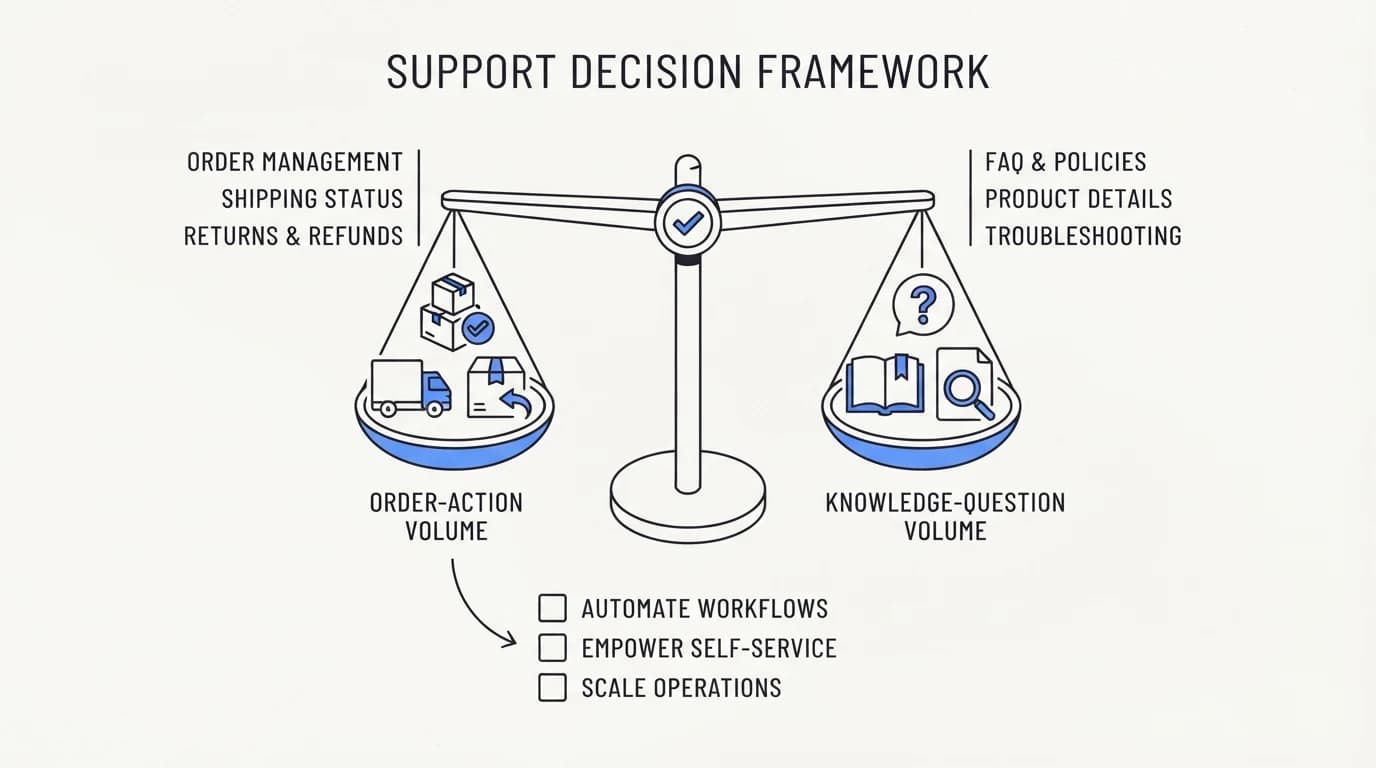
Start by categorizing a month of tickets into order actions versus knowledge questions. A queue dominated by order status, refunds, and subscription edits is squarely Gorgias territory, and the native integration depth is worth the switching cost of staying.
A queue with a large share of product, policy, and how-to questions alongside order actions is where a broader knowledge agent earns its place, because Gorgias's action-first design was not built to carry that knowledge surface as deeply.
Weigh your commerce platform too. Gorgias's integration maturity is strongest on the platforms it has invested in longest, Shopify chief among them, and that maturity is a real asset if your store runs on a supported platform. A store on a less common platform may find the integration gap between tools smaller than expected.
Finally, decide whether you need both capabilities at once. If your answer is genuinely both deep order actions and broad knowledge coverage, plan for a hybrid approach or accept that one dimension will be less mature than the other in your first deployment, and revisit as either tool's coverage grows.
Seasonality is worth a separate check for stores that spike hard around specific dates. A store whose ticket volume triples in a two-week window around a major sale needs whichever tool it picks to hold up under that spike specifically, not just perform well on an average day, so test under peak conditions before committing either way.
Where communicate.so fits, honestly
Communicate.so pairs a grounded AI agent with a lean shared inbox and scoped actions you configure against your own systems, rather than shipping the deep, pre-built ecommerce platform integrations Gorgias has built specifically for commerce.
Channels are a web widget, live chat, and email, with in-app messages and analytics from the same agent and knowledge base. There is no native Shopify order-action integration out of the box today, no voice, and no SMS, so a store whose queue is dominated by order actions on a supported commerce platform is better served by Gorgias's existing depth.
On pricing, there is no free tier; entry is a one-time $1 activation with 100 test credits, detailed on the pricing page. If your store's real ticket mix leans toward product and policy knowledge alongside a manageable volume of order actions, that is the profile this guide points toward communicate.so.
Read that limitation plainly rather than as a hedge. A store whose queue is genuinely dominated by order status and refunds on Shopify gets more immediate value from Gorgias's existing integration depth than from a knowledge-first tool asking you to configure the same actions from scratch, and this guide is written to say that directly rather than talk around it.
The reverse is equally direct. A store that has already outgrown what Gorgias's knowledge answers can cover, and that keeps routing product and policy questions to a human because the automation cannot handle them, is the store this guide is written for, and the comparison above should make that decision straightforward rather than close, especially once the audit of order actions versus knowledge questions is actually run against real ticket data instead of assumed from memory.
Key takeaways
- Gorgias's defining strength is order-action depth: native, mature integrations that let an agent look up orders and issue refunds without leaving the inbox.
- Stores whose ticket queue is dominated by order status, refunds, and subscription edits on a supported commerce platform should stay on Gorgias.
- A broader knowledge agent adds coverage for product, policy, and how-to questions that an action-first tool was not built to carry as deeply.
- Pricing models differ in what they charge for: conversation-tier billing tracks contact volume, while usage-based credits track resolved effort.
- Categorize your real ticket mix into order actions versus knowledge questions before choosing, rather than picking on reputation alone.
Not sure which side of the order-action versus knowledge-question split your store falls on? Start with a one-dollar account activation that includes 100 test credits, connect your product and policy content through data sources, and test it against the questions Gorgias's action integrations were never meant to answer.
Frequently asked questions
Is communicate.so a direct Gorgias alternative for ecommerce?
For general knowledge coverage, yes; for order-action depth on a supported commerce platform, Gorgias is the more mature tool today. The honest fit depends on whether your ticket mix leans toward order actions or toward product and policy questions, which this comparison walks through directly.
Does Gorgias only work with Shopify?
Gorgias supports several ecommerce platforms, with its deepest and most mature integration on Shopify specifically. Confirm current platform support directly on Gorgias's site before assuming a specific platform is covered at the same depth.
What is order-action depth and why does it matter?
Order-action depth means an agent can execute a write, like issuing a refund or editing a subscription, directly from the conversation rather than only explaining policy. Gorgias built this natively for ecommerce platforms, while a general actions framework requires configuring the same writes yourself.
Should a high-volume Shopify store switch off Gorgias?
Usually not, if order actions dominate the ticket queue. The native integration depth Gorgias has built over years is hard to replicate quickly, and the switching cost of rebuilding those actions elsewhere often outweighs the benefit for an order-action-heavy store.
When does a broader knowledge agent make more sense than Gorgias?
When a large share of tickets are product, policy, or how-to questions rather than order actions. A tool that connects multiple data sources and grounds answers across all of them covers that surface more completely than an action-first tool built primarily for commerce writes.
How is communicate.so priced compared to Gorgias?
Gorgias prices around conversation volume tiers. Communicate.so uses usage-based credits, with a one-time $1 activation including 100 test credits, detailed on the pricing page. The better fit depends on whether your tickets are mostly short order lookups or longer knowledge questions.
Can I use both Gorgias and a knowledge-focused AI agent together?
Some stores run a hybrid setup, keeping order actions on Gorgias while routing knowledge-heavy questions through a broader agent. This adds integration complexity, so it makes sense mainly for stores with a genuinely large volume on both sides of the split.
What happens to my Gorgias automation rules if I switch?
They do not transfer automatically. Automation rules built for ecommerce-specific scenarios, like shipping delays or return windows, encode real operational knowledge that needs to be rebuilt deliberately in a new tool rather than assumed to carry over.
Does communicate.so support WhatsApp for ecommerce support?
Not today; current channels are a web widget, live chat, email, and in-app messages. If WhatsApp is a hard requirement for your store's support flow, the WhatsApp AI customer support guide covers what that channel requires more broadly.
Is Gorgias good for stores with complex product catalogs?
Gorgias handles order-action questions well regardless of catalog size, but its knowledge grounding for deep product detail, sizing, materials, and variant-specific questions is not its core strength. A large, complex catalog often needs broader knowledge grounding alongside order-action support.
What ecommerce platforms does communicate.so integrate with natively?
Communicate.so does not ship pre-built native ecommerce platform integrations the way Gorgias does. Order-related actions are configured through the general actions framework against your systems, which requires setup Gorgias handles out of the box for supported platforms.
How do I know if my store should categorize as order-action-heavy?
Pull a month of tickets and count how many involve order status, refunds, shipping changes, or subscription edits versus product, policy, or how-to questions. A queue where order actions dominate points toward Gorgias; a queue with substantial knowledge questions points toward a broader agent.
Does switching away from Gorgias risk losing order data context?
It can, if the new tool's action integrations are not configured with the same depth before cutover. Test order lookups and refund flows thoroughly against your real commerce platform before routing live traffic through a new tool.
Is Gorgias more expensive than communicate.so?
It depends on ticket volume and mix. Gorgias's conversation-tier pricing can cost more for a store with high contact volume dominated by quick order lookups, while communicate.so's usage-based credits, on the pricing page, track resolved effort rather than raw contact count.
Can an AI agent issue a refund the way Gorgias can?
Yes, if the refund action is configured through a scoped actions integration against your payment system, but that configuration work is on you, not pre-built the way Gorgias's native integration is. Confirm the specific write operations your store needs before assuming parity.
What security certifications does communicate.so have compared to Gorgias?
Communicate.so is GDPR-ready but not certified, without SOC 2, HIPAA, or ISO 27001 today, detailed on the security page. Confirm your specific compliance requirements against both vendors, especially if you process payment data through either tool's actions.
Does a broader knowledge agent reduce hallucinated answers on product questions?
Only if the content it retrieves from is accurate and complete, and if it has a working refusal path when the content does not cover a question. Twig's review of common AI support complaints names hallucinated answers as a top failure mode regardless of vendor (Twig), so grounding quality matters more than which tool you choose.
Which store profile is the clearest case for staying on Gorgias?
A high-volume Shopify store running frequent flash sales or subscription boxes, where the ticket queue is dominated by order status, shipping delays, and billing edits. That is the profile Gorgias's native integrations and automation rules were built for, and switching away trades away real, tuned capability.
Which store profile is the clearest case for a broader knowledge agent?
A store with a wide or frequently changing product catalog, regional policy variations, and a ticket mix where product and policy questions outnumber order actions. That is where connecting multiple data sources closes gaps an action-first tool leaves open. A store expanding into new product categories or new regions faster than its documentation can keep up is an especially strong fit, since the knowledge gap is actively growing rather than static.
How do I test order-action accuracy before trusting an AI agent with refunds?
Run the agent against a set of real order scenarios in a controlled setting first, checking every lookup and refund against what your commerce platform actually shows. Configure a confirmation step for refunds above a threshold through actions, and only widen the agent's write permissions once a run of real transactions comes back clean. Keep that confirmation threshold in place even after the initial testing period, since a permanent guardrail on larger refunds costs little and bounds the damage of a rare misfire.