
Ticket deflection rate: how to measure it honestly
 Communicate.so
Ticket deflection rate: the formula, how to measure it honestly, vanity vs real deflection, and how AI improves it without hurting CSAT.
TL;DR: Ticket deflection rate is the share of support contacts resolved before they reach a human agent, usually because self-service or an AI agent answered the question first. The formula is simple: divide the contacts handled without a human by the total contacts that started, then read the result with care, because the same number can describe a customer who got a great answer or one who gave up in frustration. This guide defines the metric, shows the formula, and walks through how to measure it honestly, why published benchmarks mislead more than they help, and the sharp line between vanity deflection that just hides tickets and real deflection that actually resolves them. It also covers how an AI agent grounded in your own data can raise the rate without wrecking customer satisfaction, because deflection that costs you CSAT is not a win, it is a slower loss. Treat deflection as a diagnostic you pair with satisfaction and resolution, never as a target you chase on its own.
Ticket deflection rate is one of the most quoted numbers in support and one of the most quietly misleading. It is easy to move in the wrong direction, easy to inflate by accident, and easy to celebrate while your customers get angrier. A number that looks like efficiency can be a number that measures how many people you exhausted into silence.
This guide treats deflection as a diagnostic rather than a trophy. It defines the metric precisely, gives you the formula, and then spends most of its length on the harder question of how to measure it honestly, so the rate you report reflects real resolution and not abandonment. If you are automating support, deflection is a number you will be asked about, and it is worth understanding before someone hands you a target for it.
It is written for the person accountable for the queue: a founder, a support lead, or an ops owner weighing whether customer support automation is paying off. Deflection sits next to metrics like resolution rate and handle time, and it only means something when you read it alongside them. This post is the honest explainer, and it will push back on the vanity version of the metric at every turn.
What ticket deflection rate actually means
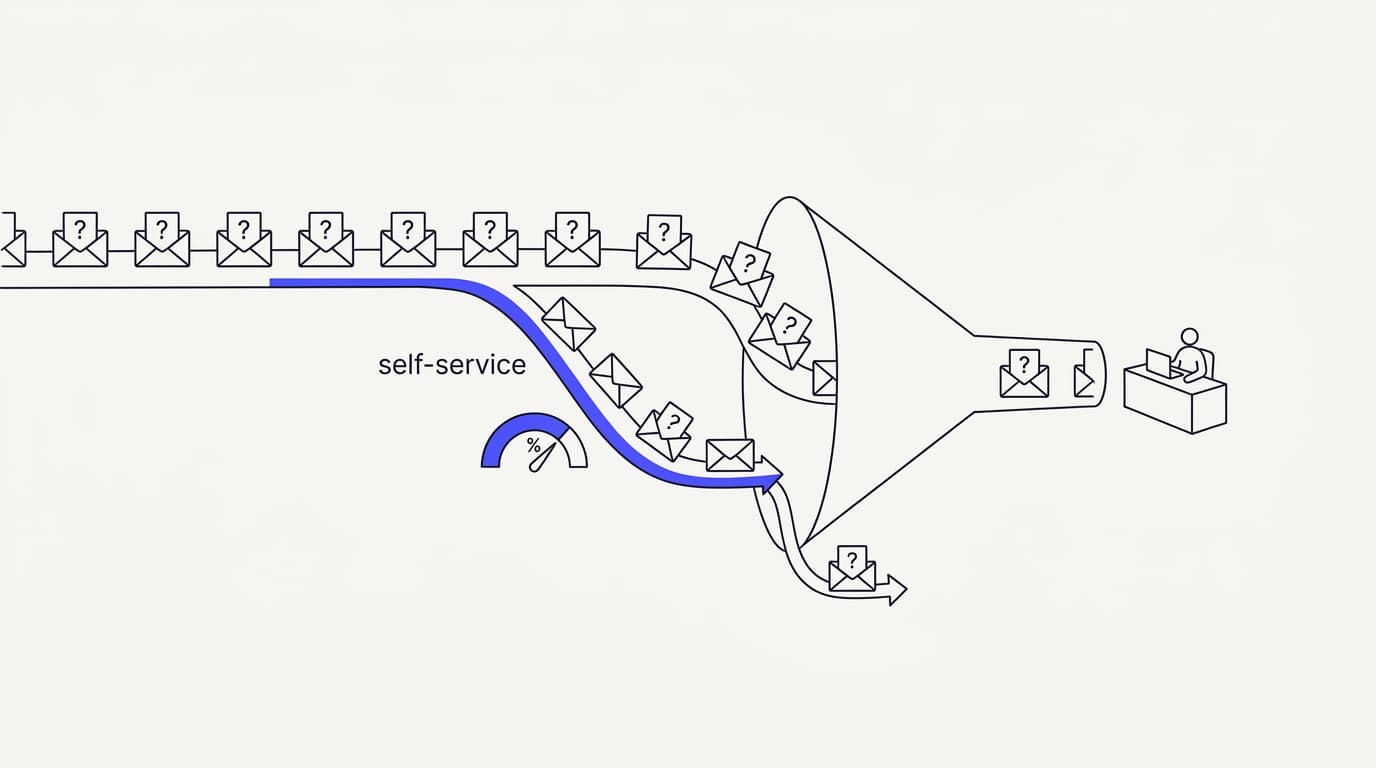
Ticket deflection rate is the percentage of support contacts that are resolved without a human agent getting involved. A customer arrives with a question, self-service or an automated agent answers it, and the contact never becomes a ticket in a person's queue. That avoided ticket is the deflection, and the rate is how often it happens across all the contacts you see.
The word deflection carries an assumption worth surfacing. It implies the contact was headed for a human and got redirected to a self-serve answer instead. That framing is useful, but it hides a trap: a contact only counts as a genuine deflection if the customer actually got what they needed, not merely if they stopped talking to you.
The distinction sounds pedantic until you see how the number gets used. Deflection is often reported as a cost-savings metric, because every deflected ticket is a human minute you did not spend. That makes it tempting to maximize, and maximizing the wrong version of it is how support teams quietly damage the customer experience while the dashboard turns green.
Deflection also gets confused with adjacent metrics, so it helps to separate them early. Resolution rate measures how many contacts were solved, by anyone, including humans. Deflection measures the narrower slice solved without a human, which is why an AI agent that resolves questions on its own is the most direct lever on the rate.
There is a second cousin called containment rate, common in chatbot and IVR contexts, that measures how many sessions stayed inside the automated channel without escalating. Containment and deflection overlap heavily, and vendors use the terms almost interchangeably. The important thing is not the label but whether the contained or deflected contact ended in a real answer or a dead end.
Industry groups treat self-service as a governance and design problem, not just a cost line. Usability researchers at the Nielsen Norman Group have long argued that self-service only works when the answer is genuinely easier to find than asking a person. Deflection rate is really a measure of whether you have built that easier path, or just made the human path harder to reach.
The ticket deflection rate formula
 Communicate.so
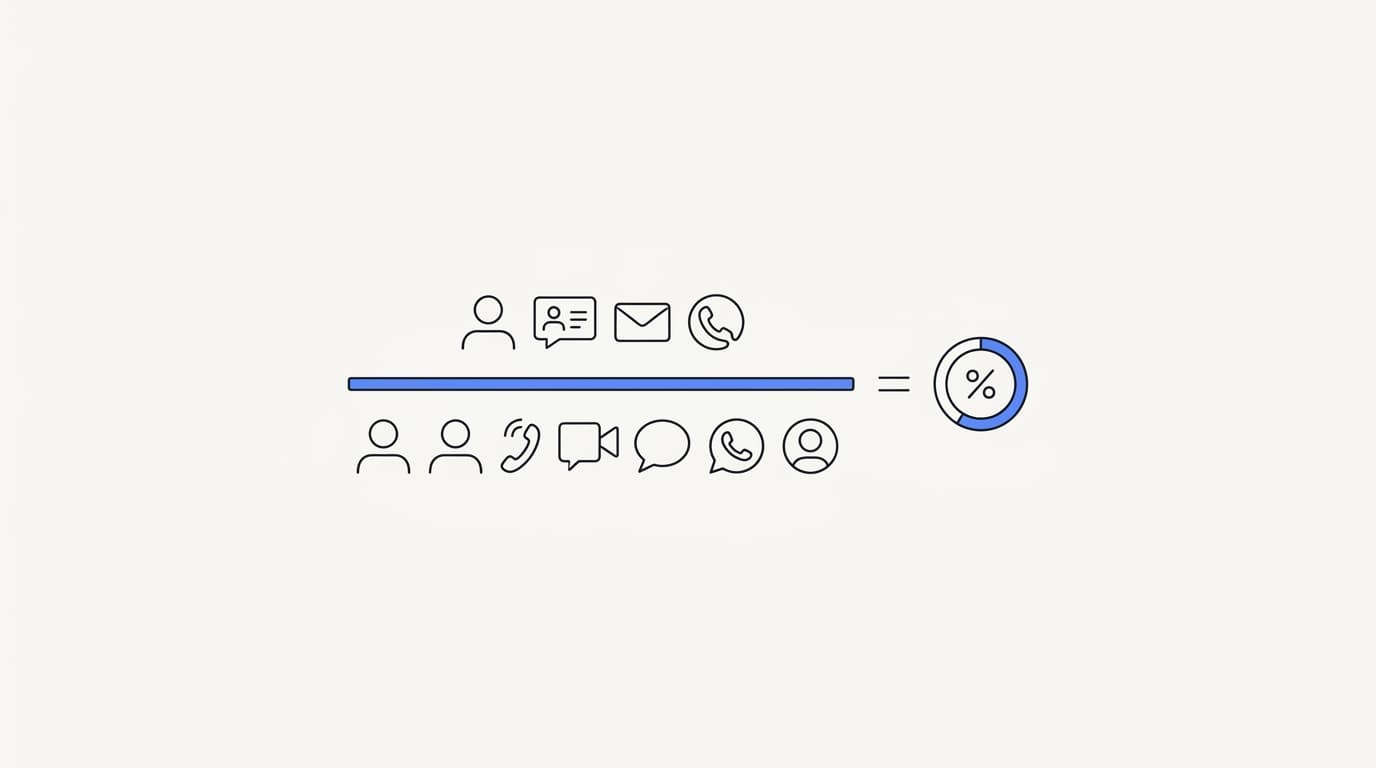
The core formula is deliberately simple. Ticket deflection rate is the number of contacts resolved without a human, divided by the total number of contacts that started, expressed as a percentage. Everything hard about the metric is hidden in how you define each of those two terms, which is where most teams go wrong.
Stated plainly, the calculation reads as follows. Take the contacts your customers initiated in a period, count how many of those were handled entirely by self-service or an automated agent, and divide the second number by the first. Multiply by one hundred and you have the rate for that period.
Write the two inputs down before you trust any output. The numerator is deflected contacts, and the denominator is total contacts, and both need honest definitions. If you get sloppy with either, the rate becomes a number that describes your reporting choices more than your customer experience.
- Deflection rate = deflected contacts / total contacts, times one hundred for a percentage.
- Deflected contacts = contacts resolved without a human agent ever getting involved.
- Total contacts = every contact that started in the period, including the ones that reached a human.
- A deflected contact should mean the customer got a usable answer, not that they simply stopped responding.
- Measure the numerator and denominator over the same window and the same channels, or the ratio is meaningless.
Notice what the formula does not tell you on its own. It says nothing about whether the deflected customer was satisfied, whether they came back the next day with the same question, or whether they abandoned the conversation in disgust. The arithmetic is trivial, and the judgment is entirely in what you allow to count as deflected.
A common variation swaps the denominator for total potential contacts, an estimate of how many questions would have become tickets if self-service did not exist. That version is popular because it produces a bigger, friendlier number, but it rests on a guess about a queue that never formed. Prefer the version built on contacts you can actually observe, and treat the potential-contacts flavor as an estimate, not a fact, a discipline that also keeps your analytics honest.
If you run more than one channel, calculate deflection per channel before you blend them. A web widget backed by an AI agent, a live chat queue, and an email inbox each deflect very differently, and a single blended number can hide a channel that is quietly failing. The formula is the same everywhere, but the story changes once you see it split out.
How to measure ticket deflection rate honestly
 Communicate.so
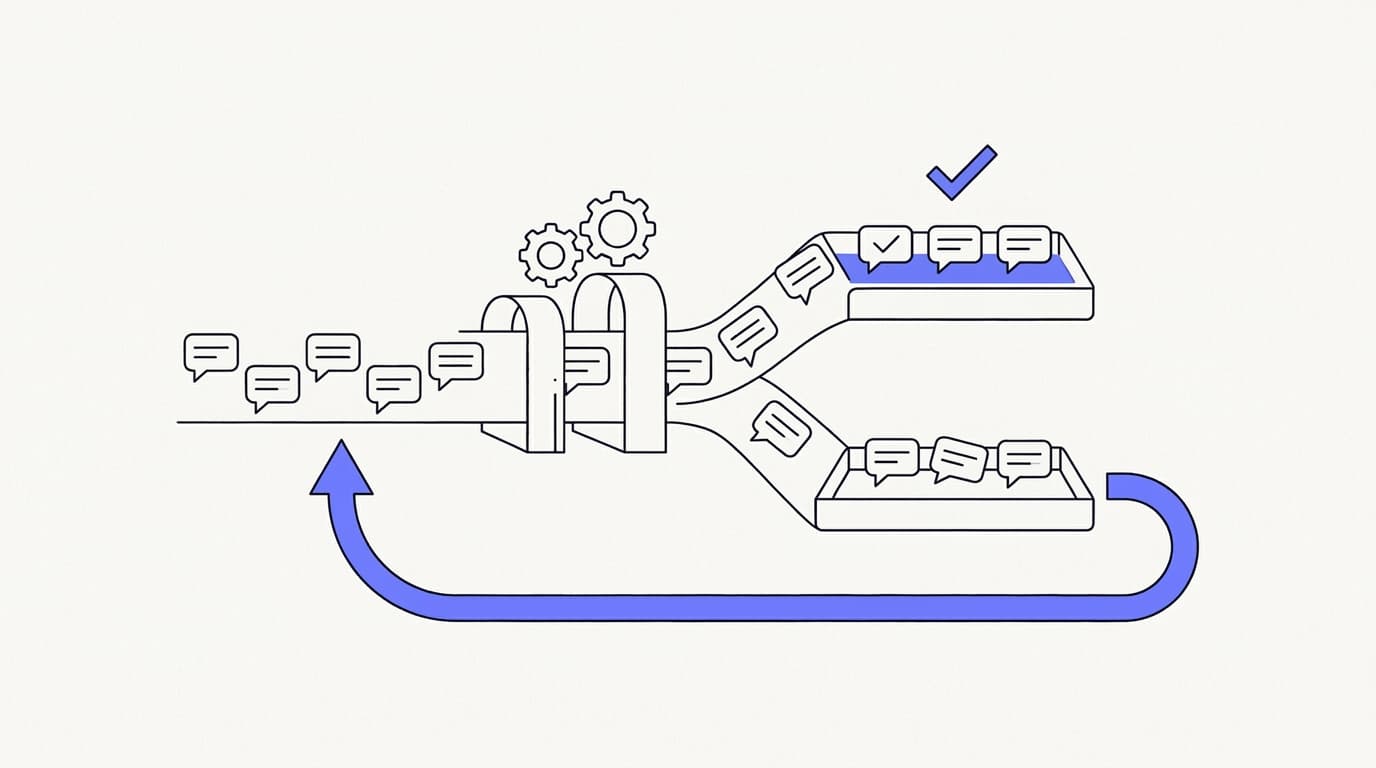
Honest measurement starts with the definition of a deflected contact. The lazy definition is any contact that did not reach a human, which quietly counts every abandonment, every rage-quit, and every customer who gave up as a success. The honest definition requires evidence that the customer actually got their answer, which is harder to capture and far more truthful.
The single biggest measurement error is treating abandonment as deflection. A customer opens the help widget, cannot find an answer, closes the tab, and never contacts you again. That contact never reached a human, so a naive counter marks it deflected, when in reality you lost the interaction and possibly the customer.
To separate the two, you need a signal of resolution, not just an absence of escalation. That can be an explicit thumbs-up on the answer, a follow-up survey, or the simple fact that the same customer did not re-contact you about the same issue within a few days. Tying deflection to a resolution signal in your analytics is what turns it from a vanity number into a diagnostic you can trust.
Re-contact rate is the most practical honesty check most teams have. If a customer who was marked deflected comes back within a short window with the same question, that deflection was fake, and it should be reversed in your numbers. Watching re-contacts turns a one-shot deflection count into a truer picture of whether the answer actually stuck.
Decide how escalations count before you report anything. A contact that starts with an AI agent and then hands off to a human is not a deflection, it is an assisted contact, and counting it as deflected inflates the rate. A clean AI to human handoff is a good outcome for the customer, but it belongs on the human side of the deflection ledger, not the automated side.
Segment the rate by question type while you are at it. Deflection on documented, repetitive questions is exactly what you want, and a high rate there is healthy. Deflection on sensitive or complex questions is a warning sign, because those are the contacts a person should have handled, and a high automated rate there usually means customers are being turned away rather than helped.
Finally, measure deflection over a consistent window and never compare periods with different definitions. The temptation to redefine deflected mid-quarter, right after someone sets a target, is real and corrosive. Lock the definition, document it, and let the reduce AI hallucinations in support discipline of grounded answers do the actual work of raising the rate, rather than reporting tricks.
Vanity deflection versus real deflection
 Communicate.so
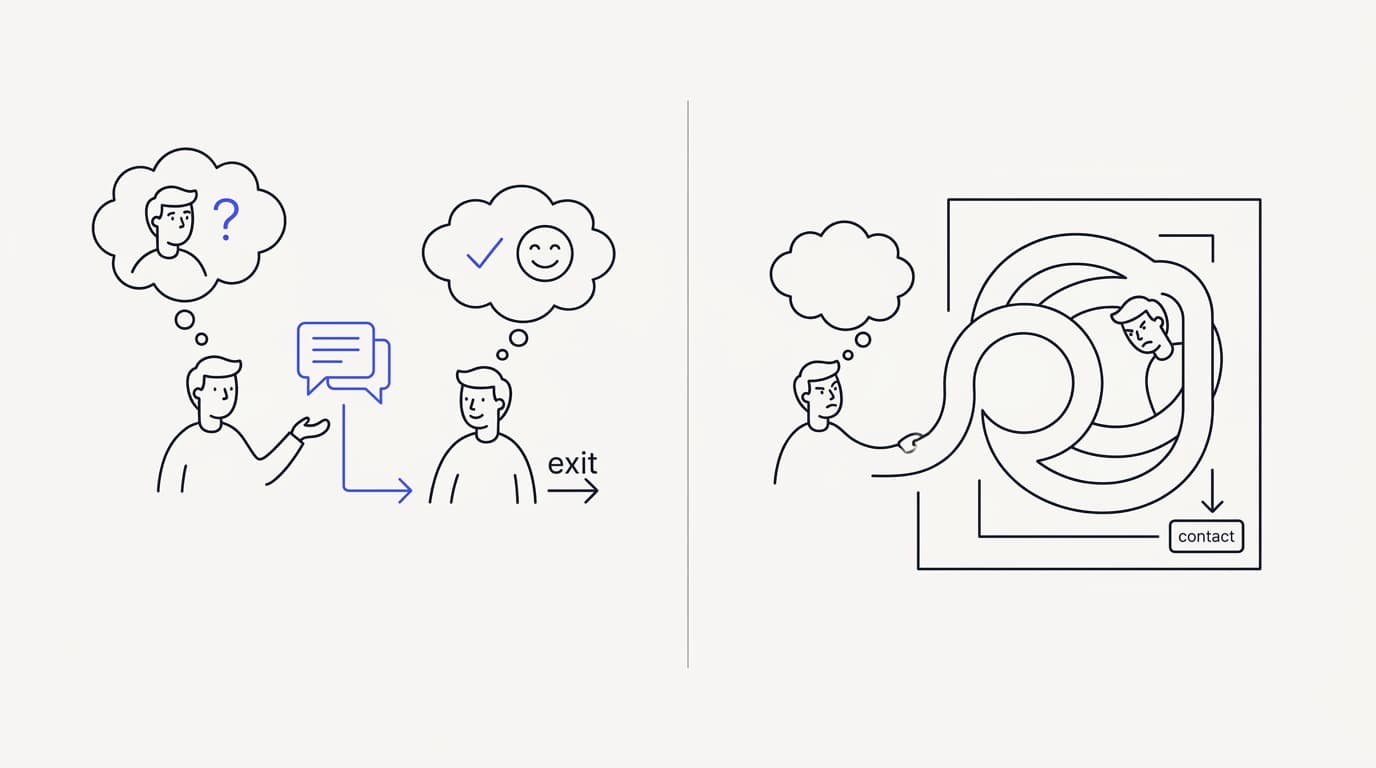
The whole metric lives or dies on one distinction. Real deflection means the customer got a correct, usable answer and left satisfied, so the avoided ticket is a genuine win. Vanity deflection means the ticket disappeared from your queue for reasons that have nothing to do with the customer being helped, and it is worse than no deflection at all because it hides a problem behind a good-looking number.
Vanity deflection has many sources, and most of them feel like progress in the moment. Burying your contact button so customers cannot find a human deflects tickets, but it does it by frustrating people, not by answering them. A dead-end FAQ that technically loads but does not resolve the question deflects the contact and loses the customer at the same time.
The reason this matters so much is that vanity deflection is self-reinforcing. A customer who cannot get help stops trying, which lowers your contact volume, which raises your deflection rate, which looks like success on the dashboard. Meanwhile churn rises silently, and the connection is easy to miss unless you pair deflection with satisfaction, the exact trap customer support automation can walk you into if you optimize the wrong number.
The table below lays out the signals that separate the two. Real deflection leaves a trail of satisfied, resolved customers, while vanity deflection leaves a trail of abandonment and re-contacts. Read your own deflected contacts against these rows before you trust the headline rate.
| Signal | Real deflection | Vanity deflection |
|---|---|---|
| Customer question fully answered | ✓ | ✗ |
| Customer leaves satisfied, no follow-up | ✓ | ✗ |
| Answer grounded in your own sources | ✓ | ✗ |
| Clean handoff offered when the agent is unsure | ✓ | ✗ |
| Counted because the customer gave up | ✗ | ✓ |
| Ticket reopened or re-contacted within days | ✗ | ✓ |
| Deflected into a dead-end article or loop | ✗ | ✓ |
| Human contact deliberately hidden to force self-serve | ✗ | ✓ |
Read the table as a test you apply to a sample of real deflected contacts, not a scoring rubric for the aggregate. Pull thirty contacts your system marked as deflected and check each against the rows, and you will quickly learn whether your rate is honest. If most of your deflections land on the vanity side, the number is lying to you, and raising it further just deepens the lie.
The fix for vanity deflection is almost never a smarter deflection tactic. It is better content, a more capable agent, and an easier path to a human when the automated answer falls short. The data you connect to the agent, through your connected data sources, drives real deflection far more than any clever routing that pushes customers away from people.
Why deflection benchmarks mislead more than they help
The first question everyone asks is what a good deflection rate is, and the honest answer is that the question is close to unanswerable. Published benchmarks vary wildly because they measure different things under the same name. One vendor counts abandonment as deflection and another does not, so their numbers are not comparable even before you account for industry, product complexity, or content quality.
A deflection rate only means something relative to a definition and a context. A simple product with excellent documentation and a patient audience will deflect far more than a complex, high-stakes product where customers reasonably want a person. Comparing your rate to a stranger's benchmark tells you almost nothing, because you are comparing two different measurements taken in two different worlds.
The failure rate of AI initiatives is a useful corrective here. RAND's 2025 review of more than 2,400 enterprise AI initiatives found roughly 80% failed to deliver measurable value, mostly on operational discipline rather than model quality (RAND). Chasing a benchmark deflection number is exactly the kind of target that produces motion without value, because the number moves while the customer experience does not.
There is also a ceiling worth naming, because not every contact should be deflected. Sensitive complaints, disputes, and judgment calls belong with a human, and a healthy support operation deliberately routes them there. A deflection rate approaching one hundred percent is not an achievement, it is a sign you are automating conversations that needed a person, which is a trust problem waiting to surface.
This is why the useful comparison is against yourself over time, not against the industry. Measure your own deflection with a locked definition, watch it move as you improve content and tune the agent, and judge success by whether satisfaction holds while the rate climbs. That trend line is worth more than any external number, and it pairs naturally with tracking average handle time reduction on the contacts that still reach your team.
If you must set a target, set it as a paired goal rather than a single number. Raise deflection while holding or improving satisfaction and resolution, and treat any deflection gain that costs you CSAT as a regression, not a win. A target on deflection alone is an invitation to game it, and the easiest way to game it is to help customers less.
How AI improves deflection without hurting CSAT
 Communicate.so
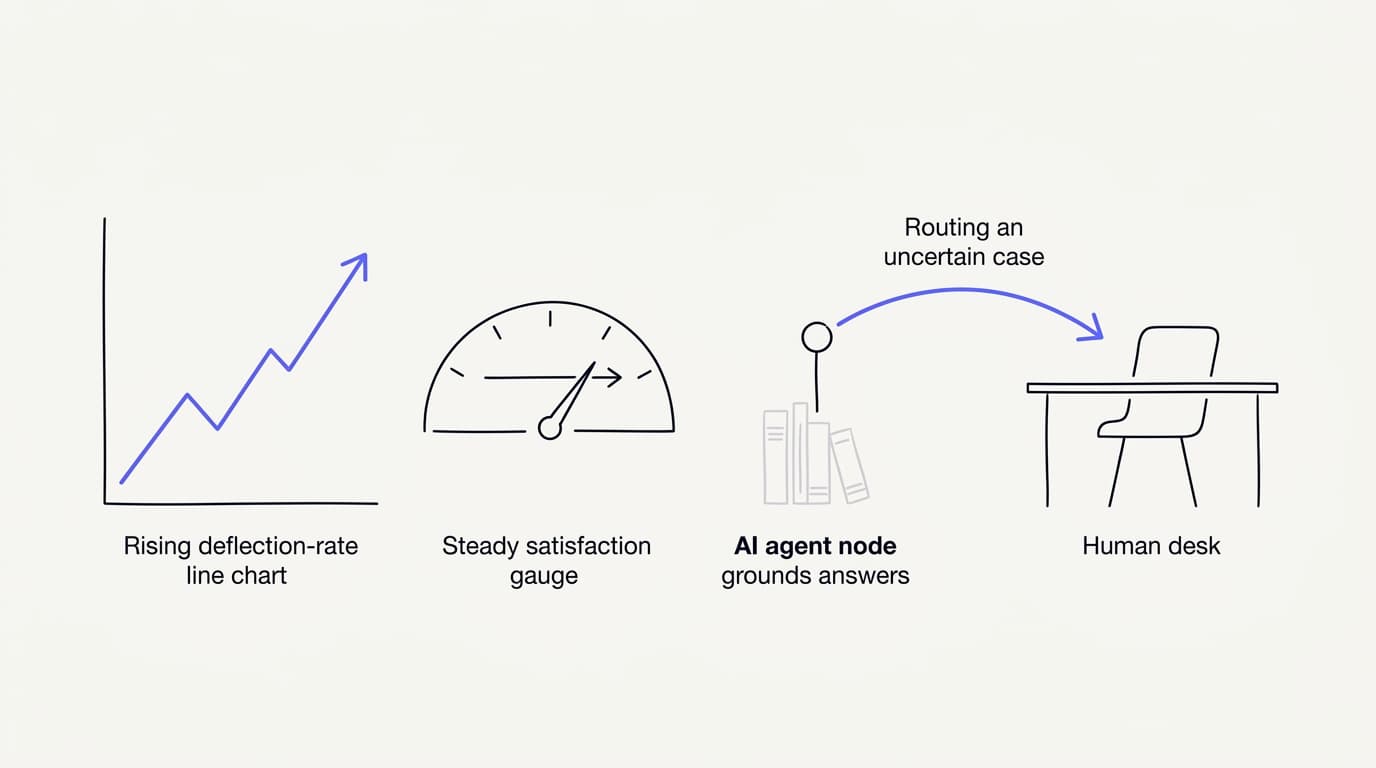
The reason deflection and satisfaction usually fight is that old self-service was passive. A static FAQ makes the customer do the work of finding, reading, and interpreting the answer, and when they fail, the deflection is really an abandonment. An AI agent changes the shape of the problem by answering the specific question in the customer's own words, which is how you raise deflection and satisfaction at the same time.
The mechanism that makes this safe is grounding. A grounded agent retrieves from your own content and answers from what it finds, rather than generating from a model's general knowledge, so its answers are tied to your real policies and documentation. That is the difference between a deflection that resolves and a confident wrong answer that creates a second, angrier contact.
Grounding is also the guardrail against the failure mode that quietly destroys CSAT. An ungrounded agent fills gaps with plausible invention, and a fabricated answer on a support channel lands as an official promise, which is worse for satisfaction than no answer at all. Keeping answers grounded, the core theme of how to reduce AI hallucinations in support, is what lets deflection rise without dragging satisfaction down with it.
The second mechanism is knowing when not to deflect. A well-built agent hands off when it is unsure, so the hard and sensitive contacts reach a person instead of getting a forced automated answer. That is deflection with a safety net rather than deflection at all costs, and it is why a capable agent protects CSAT while a crude deflection tactic erodes it.
The handoff itself has to be clean, or the deflection gain comes at the cost of the escalations. When the agent steps aside, the human should inherit the full context so the customer never repeats themselves, because repeating information is one of the top support frustrations, with Zendesk's 2024 CX Trends research finding 74% rank it among their biggest annoyances (Zendesk). A shared inbox that carries context through the handoff is what keeps the escalated contacts satisfied.
The third mechanism is that a good agent improves the content that drives deflection. Every question the agent cannot answer is a visible gap in your knowledge base, and closing it lifts the deflection rate on that question for everyone who asks next. Deflection becomes a compounding loop: the agent surfaces the gaps, you fix the content, and the rate climbs on the back of genuinely better answers.
The ceiling for this, done well, is high. Gartner has projected that by 2029, agentic AI will autonomously resolve 80% of common customer service issues without human intervention (Gartner). Reaching a number like that safely is not about a deflection tactic, it is about grounded answers, clean handoffs, and content discipline, which is the same recipe that keeps satisfaction intact while the rate rises.
Where Communicate fits, honestly
Communicate is built for real deflection rather than the vanity kind, because the agent grounds answers in your data and hands off when it is unsure. That is deflection with a safety net, not forced deflection, so the rate rises on questions the agent can genuinely resolve while the hard ones reach a person. If you want a bot that answers everything to pump a deflection number, it is deliberately not that tool, and the ai customer support software comparison spells out the trade-offs.
Here is what it does without embellishment. The agent trains on your connected sources through grounded retrieval and escalates rather than guessing when it finds nothing, which is what keeps a deflected contact a real resolution. The live channels are a web widget, live chat, and email, with in-app messages, analytics, and scoped actions running from the same agent and knowledge base, so deflection behaves consistently across every surface.
On measurement, the analytics feature surfaces resolution and handoff metrics so you can read deflection honestly instead of counting every non-escalation as a win. The Shared Inbox uses presence-based human takeover with a per-turn backstop, so when a teammate is viewing a conversation the AI steps back rather than talking over them, which keeps the escalated contacts clean. Those two pieces together are how you separate real deflection from the vanity kind in practice.
On the model, Communicate runs a single model, gpt-4o-mini through OpenRouter, with response and prompt caching to keep cost and latency down. That is a deliberate choice, because grounding and the data you connect drive deflection quality far more than swapping models does. A model-picker would shift tuning onto you without deflecting a single extra ticket safely.
On pricing, there is no free tier. Entry is a one-time $1 activation that confirms you are a real person and includes 100 test credits, then credit-based usage from there, which keeps support cost tracking usage rather than headcount. Spend those test credits measuring deflection on your ugliest real questions before you trust the rate live.
Now the honest limits. Communicate is GDPR-ready but not certified, holds no SOC 2, HIPAA, or ISO 27001, runs in a single region, and does not offer SSO. It supports TOTP two-factor authentication, encryption at rest, workspace isolation, and self-serve export with cascading delete, a posture stated plainly on the security page.
Its live channels are the web widget, live chat, and email, with no WhatsApp, Messenger, SMS, or voice, so if any of those is a hard requirement it is not your best fit today. Questions go to [email protected].
Key takeaways
- Ticket deflection rate is deflected contacts divided by total contacts, and the whole metric turns on how honestly you define a deflected contact.
- The most common error is counting abandonment as deflection, so tie the numerator to a real resolution signal like a follow-up or a low re-contact rate.
- Vanity deflection hides tickets by frustrating customers and is worse than no deflection, while real deflection resolves the question and holds satisfaction.
- Published benchmarks mislead because they measure different things under the same name, so compare your rate against your own trend, not the industry.
- A grounded AI agent that hands off when unsure raises deflection without hurting CSAT, because it resolves what it can and routes the rest to a person cleanly.
Want to raise deflection the honest way, on answers that actually resolve? Start with a one-dollar account activation that includes 100 test credits, connect your data sources, and measure deflection against a resolution signal from day one. If you want the wider context around this, customer support automation and the ai customer support software reads are the right next steps.
Frequently asked questions
What is ticket deflection rate?
Ticket deflection rate is the percentage of support contacts resolved without a human agent, usually because self-service or an AI agent answered the question first. It measures the narrower slice of contacts solved without a person, as opposed to resolution rate, which counts contacts solved by anyone. A contact only counts as a real deflection if the customer actually got a usable answer, not merely if they stopped talking to you.
How do you calculate ticket deflection rate?
Divide the number of contacts resolved without a human by the total number of contacts that started in the period, then multiply by one hundred for a percentage. The arithmetic is trivial, and all the difficulty is in defining the two inputs honestly. Measure the numerator and denominator over the same window and the same channels, or the ratio means nothing.
What counts as a deflected ticket?
A deflected ticket is a contact that was resolved by self-service or an automated agent without a human ever getting involved, where the customer genuinely got their answer. The honest definition requires evidence of resolution, not just the absence of an escalation. A customer who could not find help and gave up should not count, even though that contact also never reached a person.
What is a good ticket deflection rate?
There is no universal good number, because published benchmarks measure different things under the same name and depend heavily on product complexity and content quality. RAND found roughly 80% of enterprise AI initiatives failed to deliver value, mostly on operational discipline (RAND), and chasing a benchmark rate is exactly that kind of empty target. Compare your rate against your own trend over time while holding satisfaction, not against a stranger's number.
What is the difference between deflection and resolution rate?
Resolution rate measures how many contacts were solved by anyone, including your human team, while deflection measures the narrower share solved without a human. A contact can be resolved without being deflected, when a person handles it, and a contact deflected without being resolved is exactly the vanity deflection you want to avoid. Reading the two together is what keeps deflection honest.
What is vanity deflection?
Vanity deflection is when a ticket disappears from your queue for reasons that have nothing to do with the customer being helped, such as a hidden contact button, a dead-end FAQ, or an abandonment counted as a success. It looks like efficiency on the dashboard but hides a worse customer experience underneath. It is worse than no deflection because it disguises a problem as a win.
How is deflection different from containment rate?
Containment rate, common in chatbot and IVR contexts, measures how many sessions stayed inside the automated channel without escalating, and it overlaps heavily with deflection. Vendors use the terms almost interchangeably. The important distinction is not the label but whether the contained or deflected contact ended in a real answer or a dead end.
Does deflection hurt customer satisfaction?
It does when you chase the vanity version, because forcing customers into self-service they cannot use frustrates them and raises deflection at the same time. Done well, with a grounded agent that hands off when unsure, deflection and satisfaction can rise together. The trap is that abandonment lowers contact volume and inflates the rate, so deflection and CSAT must always be read side by side, a risk detailed in customer support automation.
How do you measure ticket deflection honestly?
Tie the numerator to a resolution signal, not just the absence of an escalation, using a follow-up survey, an explicit thumbs-up, or a low re-contact rate. Reverse any deflection where the same customer comes back with the same question within a few days. Segmenting the rate by question type in your analytics keeps it honest, because deflection on documented FAQs is healthy while deflection on sensitive questions is a warning.
Can you deflect tickets with a help center alone?
A help center deflects some tickets, but a static article makes the customer do the work of finding and interpreting the answer, and when they fail, the deflection is really an abandonment. That passive model is why old self-service tends to raise deflection while lowering satisfaction. An agent that answers the specific question in the customer's own words resolves more of those contacts genuinely.
How does an AI agent improve deflection rate?
A grounded AI agent answers the customer's actual question from your own content, which resolves contacts that a static FAQ would have lost to abandonment. It also surfaces the questions it cannot answer, turning them into content fixes that raise deflection for everyone who asks next. Because it hands off when unsure, it lifts the rate on questions it can genuinely resolve while routing the hard ones to a person.
What is a self-service deflection rate?
Self-service deflection rate is the same metric measured specifically for your self-serve channels, like a help center or an automated agent, isolating how often those channels resolve a contact without a human. Calculating it per channel before blending is good practice, because a web widget, a live chat queue, and an email inbox each deflect very differently. A single blended number can hide a channel that is quietly failing.
Why can deflection rate be misleading?
Deflection is misleading because the same number can describe a satisfied customer who got a great answer or a frustrated one who gave up, and the naive definition counts both as success. It is easy to inflate by hiding the human path, and easy to compare against benchmarks that measured something different. Reading it without satisfaction and re-contact data is how teams celebrate a number while customers churn.
Should I aim for 100% deflection?
No, because not every contact should be deflected, and a rate approaching one hundred percent usually means you are automating conversations that needed a person. Sensitive complaints, disputes, and judgment calls belong with a human, and routing them there deliberately is a sign of a healthy operation. The goal is high deflection on the repetitive majority with clean handoffs on the rest, not deflection at all costs.
How does deflection relate to average handle time?
Deflection removes the repetitive, easy contacts from the human queue, which changes the mix your team handles and therefore affects average handle time. The contacts that still reach a person skew toward the harder ones, so handle time can shift as deflection rises. Reading the two together, alongside average handle time reduction, gives a truer picture than either metric alone.
What data do I need to measure deflection?
You need a count of total contacts that started, a count of contacts resolved without a human, and a resolution signal to confirm the deflected contacts were genuinely helped. A re-contact window is the most practical honesty check, showing whether a deflected answer actually stuck. Without the resolution signal, you are only measuring the absence of escalation, which quietly counts abandonment as a win.
How do abandoned chats affect deflection numbers?
Abandoned chats are the single biggest source of inflated deflection, because a customer who closes the tab never reached a human and gets marked deflected by a naive counter. That is a lost interaction dressed up as a success. Separating abandonment from real resolution, using a follow-up or re-contact signal, is the most important correction most teams need to make.
How often should I measure deflection rate?
Measure it on a consistent cadence with a locked definition, and never change what counts as deflected mid-period, especially right after someone sets a target. A monthly trend with the same definition tells you far more than a one-time snapshot. Re-run the measurement whenever you change content, tune the agent, or add a channel, because each of those can shift the rate.
Does Communicate report deflection metrics?
Communicate's analytics feature surfaces resolution and handoff metrics, so you can read deflection against a real resolution signal rather than counting every non-escalation as a win. The Shared Inbox uses presence-based human takeover with a per-turn backstop, so escalated contacts stay clean and are not miscounted as deflections. Together they let you separate real deflection from the vanity kind in practice.
How do I improve my ticket deflection rate?
Improve the content and the agent that drive real deflection, rather than reaching for tactics that push customers away from a human. Close the knowledge gaps the agent surfaces, keep answers grounded in your connected data sources, and make the handoff clean so escalations stay satisfied. Raising deflection while holding satisfaction is the only version of the gain worth having, and it compounds as your content improves.