
AI support data retention: policies that satisfy legal and keep the agent useful
 Communicate.so
How to set a chat data retention window that meets storage limitation obligations without deleting the history an AI support agent needs to stay accurate.
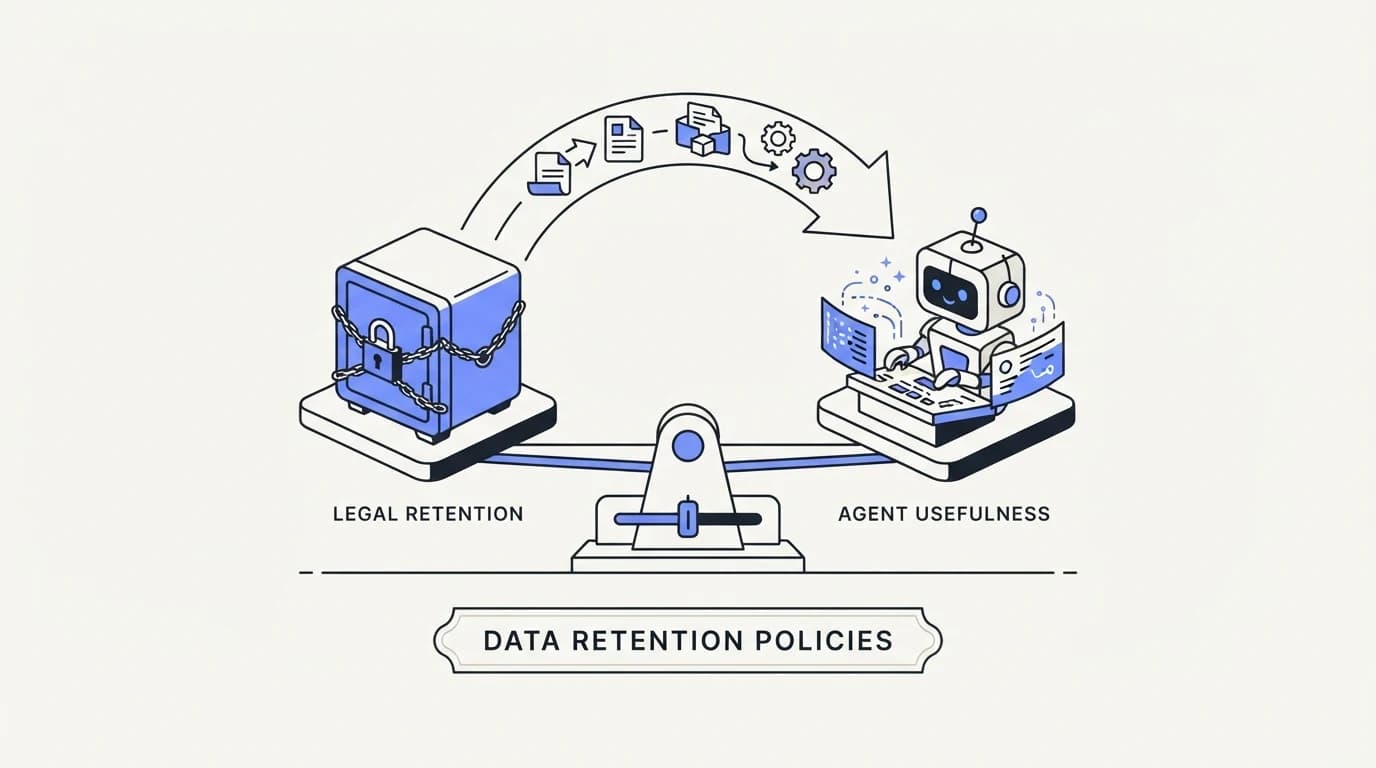
TL;DR: A data retention policy for AI customer support has to satisfy two pulls that look opposed. Privacy law under frameworks like GDPR requires that personal data not be kept longer than necessary for its purpose, and an AI agent gets more useful the longer it can see a customer's history. This guide explains what the storage limitation principle actually requires, what it does not require, and how to set a retention window by category of data rather than one blanket number. It covers where a support AI stack typically stores conversation data, how long is defensible for each category, and what deleting on schedule actually looks like in a retrieval-based system. It closes with the honest current state of retention at communicate.so.
Ask five support teams how long they keep chat history and you will get five different answers, most of them a guess. Some keep everything forever because deleting feels risky. Some delete aggressively because a lawyer once said less data is safer.
Neither answer is a policy, and neither survives contact with a regulator or an AI agent that needs history to do its job.
This guide is written for the person who has to actually set the number: 30 days, 90 days, a year, indefinite. It works through what the law requires, what an AI agent actually needs to stay useful, and how to reconcile the two by data category instead of one setting that is either too short to be useful or too long to defend. If you have not yet worked through the legal basis question, the GDPR and AI customer support guide covers lawful basis and the right to erasure in more depth alongside retention.
What storage limitation actually requires
GDPR does not set a fixed retention number. It requires that you set one, justify it, and enforce it. Article 5(1)(e) of the GDPR requires personal data be kept in a form permitting identification of the person for no longer than necessary for the purposes it was processed for.
The number is yours to defend, not the regulator's to hand you.
This is the point most teams get backwards. There is no universal safe number, no compliance-approved 90 days that applies to every business. The obligation is to tie a retention period to a stated purpose, document it, and actually delete or anonymize the data when that period ends, not just have a policy document that says you will.
The accountability piece is where most support stacks quietly fail. A written policy that says conversations are retained for 12 months means nothing if the underlying system has no mechanism to actually purge data at 12 months and one day. Regulators evaluating storage limitation compliance look for evidence the deletion schedule runs, not just that it exists on paper, a distinction legal analysis of Article 5(1)(e) enforcement patterns has repeatedly surfaced.
California's approach under the CCPA reaches a similar place through different language. Retention has to be reasonably necessary and proportionate to the purpose the data was collected for, with no fixed timeline mandated, but businesses must disclose how long each category of personal information is retained, or the criteria used to determine that period, directly to the people whose data it is.
The common thread across both frameworks is purpose-linked retention, not a magic number. A support conversation kept to resolve an active issue has a different defensible lifespan than the same conversation kept to train and ground an AI agent over time, and a single blanket policy that ignores that distinction is defending the wrong thing.
Why an AI agent complicates a simple retention answer
 Communicate.so
A support AI has a second, ongoing use for conversation data that a human-only support desk never had. A human agent reads a ticket, resolves it, and closes it. An AI agent that improves from real conversations, or that references prior interactions with a returning customer, has an argument for a longer retention window tied to a different purpose.
That argument is legitimate only when it is explicit. If your privacy notice says conversation data is used to resolve the current issue, retaining it afterward to improve model behavior is a different purpose that needs its own disclosure and its own retention justification, not a silent extension of the original window.
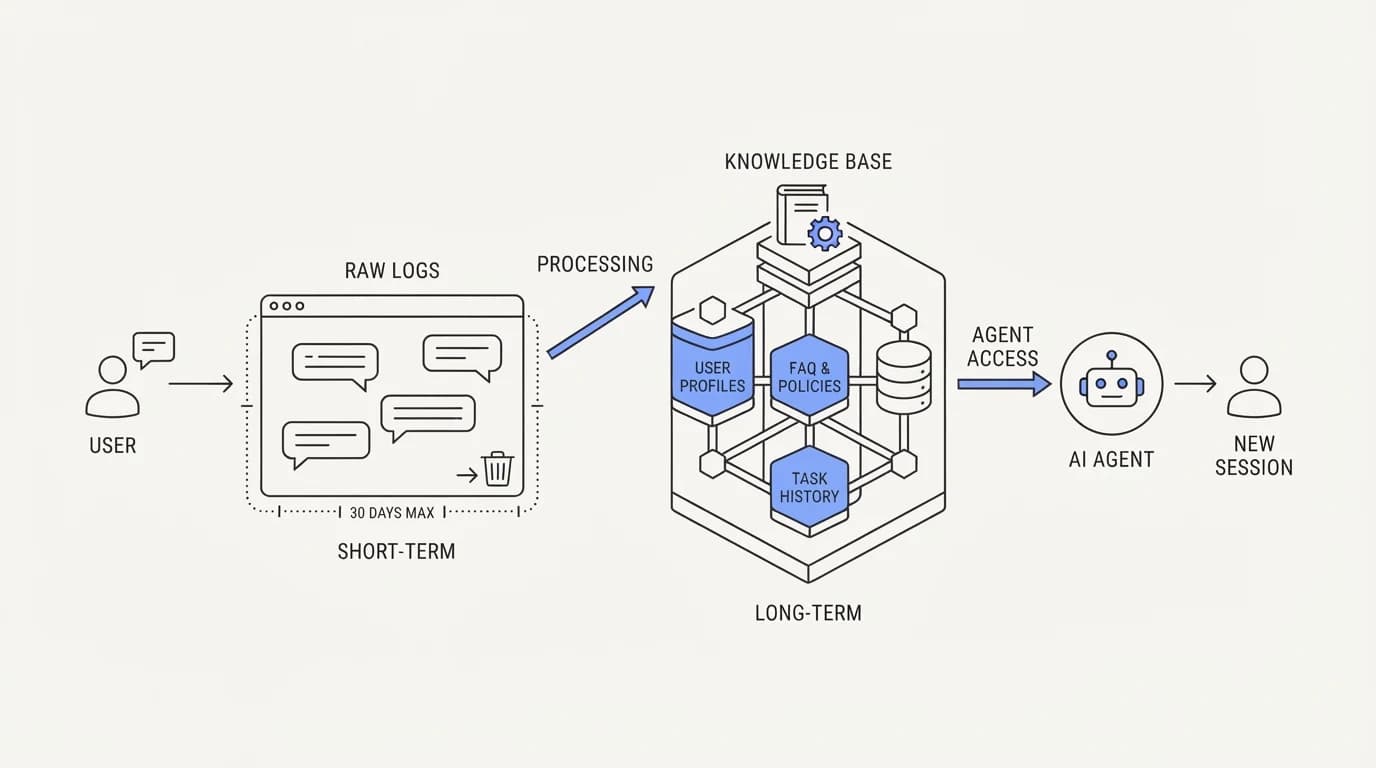
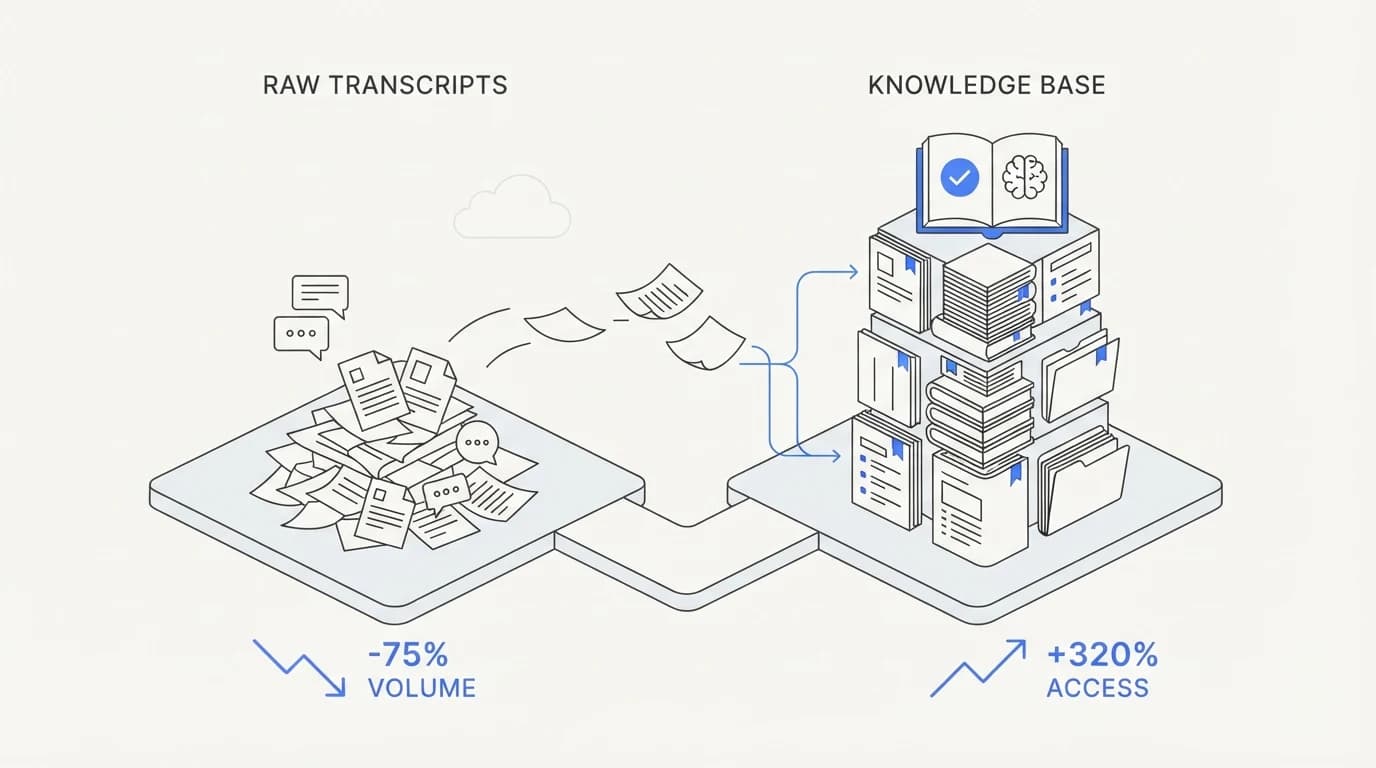
This is where the distinction between raw conversation logs and a curated knowledge layer matters. A conversation that becomes part of a help center article or an internal FAQ, through training the AI on your help center, has been deliberately generalized and stripped of the original customer's identifying details. That artifact can reasonably live much longer than the raw transcript it came from, because it is no longer personal data tied to an identifiable person.
The mistake to avoid is treating the retrieval index and the raw conversation log as the same thing with the same retention clock. They serve different purposes, they should carry different retention rules, and conflating them is how a team ends up either deleting content the AI genuinely needs or holding raw personal data years past any defensible purpose.
Where conversation data actually lives in a support AI stack
 Communicate.so
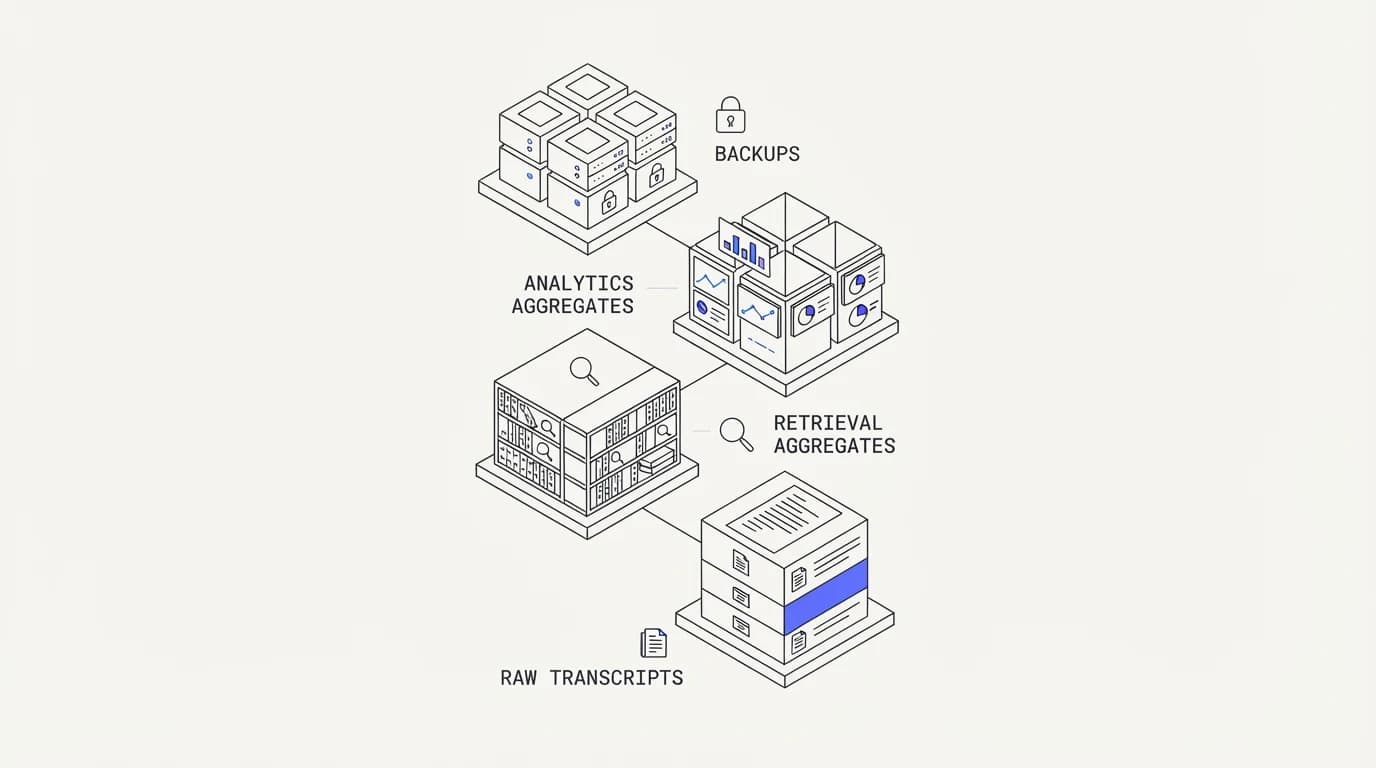
A retention policy that names one number for the whole stack is usually only accounting for the most visible location: the raw transcript a support agent reads in a shared inbox. Three other locations typically hold a version of the same data, each with its own retention behavior.
Raw conversation transcripts are the first and most obvious location, the searchable record of exactly what a customer typed and what the AI or a human replied. This is the location most retention policies are written for, and the one most directly tied to the original support purpose.
The retrieval index is the second location, where content the AI draws on to ground its answers lives as embeddings. Some of that content is genuinely a knowledge base article with no personal data attached. Some of it, if not filtered, is a snippet of a real customer conversation, which brings the retention question back into play for the reasons covered in PII redaction for customer support.
Analytics aggregates are the third location, and they are the easiest to over-retain safely because well-built analytics store counts and trends, not identifiable conversation content. A dashboard showing deflection rate over time does not need the underlying transcripts to keep working, which means analytics retention can often outlast conversation retention without raising the same purpose-limitation question.
Backups are the fourth and most overlooked location. A retention policy that deletes a conversation from the primary database but leaves it recoverable in a backup for another 90 days has not actually deleted it in any way a regulator will accept, and this is one of the most common gaps in an otherwise well-designed policy, a point privacy guidance on retention enforcement raises specifically for technical teams building deletion pipelines.
Setting a retention window by category, not one number
The workable approach splits retention by what the data is and why it is kept, not by a single company-wide setting. Below is a starting structure, not a universal answer, since the right number for your business still depends on your actual purpose and your regulator's expectations.
| Data category | Typical defensible window | Deleted with the raw log? |
|---|---|---|
| Active conversation, unresolved issue | Duration of the issue plus a short buffer | ✓ |
| Resolved conversation, general support | 90 days to 12 months, purpose-dependent | ✓ |
| Card numbers or authentication data | Not stored at all after the immediate exchange | ✓ |
| Anonymized content folded into a knowledge article | Indefinite, no longer personal data | ✗ |
| Aggregated analytics, no identifiable content | Indefinite, not personal data at the aggregate level | ✗ |
| Compliance and audit logs, if HIPAA or similar applies | At least 6 years for compliance documentation | ✗ |
Read the table as a starting framework, not a fixed answer. A regulated industry, an enterprise contract with its own data processing addendum, or a specific regulator's guidance can all move these numbers, and the exercise of setting them by category still applies even when the specific windows differ from what is shown here.
The active conversation row deserves its own attention because it is the one teams most often stretch without noticing. A ticket that stays technically open for months while nobody actively works it is not the same as a genuinely active investigation, and treating every open ticket as exempt from the clock is how a support inbox quietly accumulates years of stale personal data under the excuse that the case is still open.
Note the compliance-log row is a floor, not a ceiling, and it runs the opposite direction from the rest of the table. Where GDPR and CCPA push toward shorter retention tied to purpose, a framework like HIPAA requires covered entities to keep specific compliance documentation, including audit logs of protected health information access, for a minimum of six years. If your support line touches health information, that minimum applies regardless of how short your general chat retention is set.
The EU AI Act log retention floor, and who it actually applies to
A separate and frequently misapplied rule comes from the EU AI Act. Article 26(6) requires deployers of high-risk AI systems to keep automatically generated logs for a period appropriate to the intended purpose and at least six months, a minimum retention floor rather than a maximum.
The detail that gets lost in most compliance blog posts is that this obligation applies specifically to high-risk AI systems as the Act defines them, categories like biometric identification, credit scoring, and employment decisions. A general customer support chatbot answering product questions does not automatically fall into that classification, and treating the six-month log floor as a universal AI support requirement overstates what the Act actually asks for.
What a general-purpose support AI is more likely to trigger is the Act's transparency obligation, requiring that people be informed they are interacting with an AI system, a separate requirement from log retention entirely. The EU AI Act and customer support guide covers that distinction and the disclosure wording in more depth than fits here.
The practical lesson is not to import a log retention floor built for high-risk biometric and credit systems into a general support chatbot's policy without checking whether your specific use case is classified as high-risk in the first place. Confirm your classification before adopting a rule that may not apply to you, or you will end up retaining data you had no obligation to keep.
What deletion actually has to look like
 Communicate.so
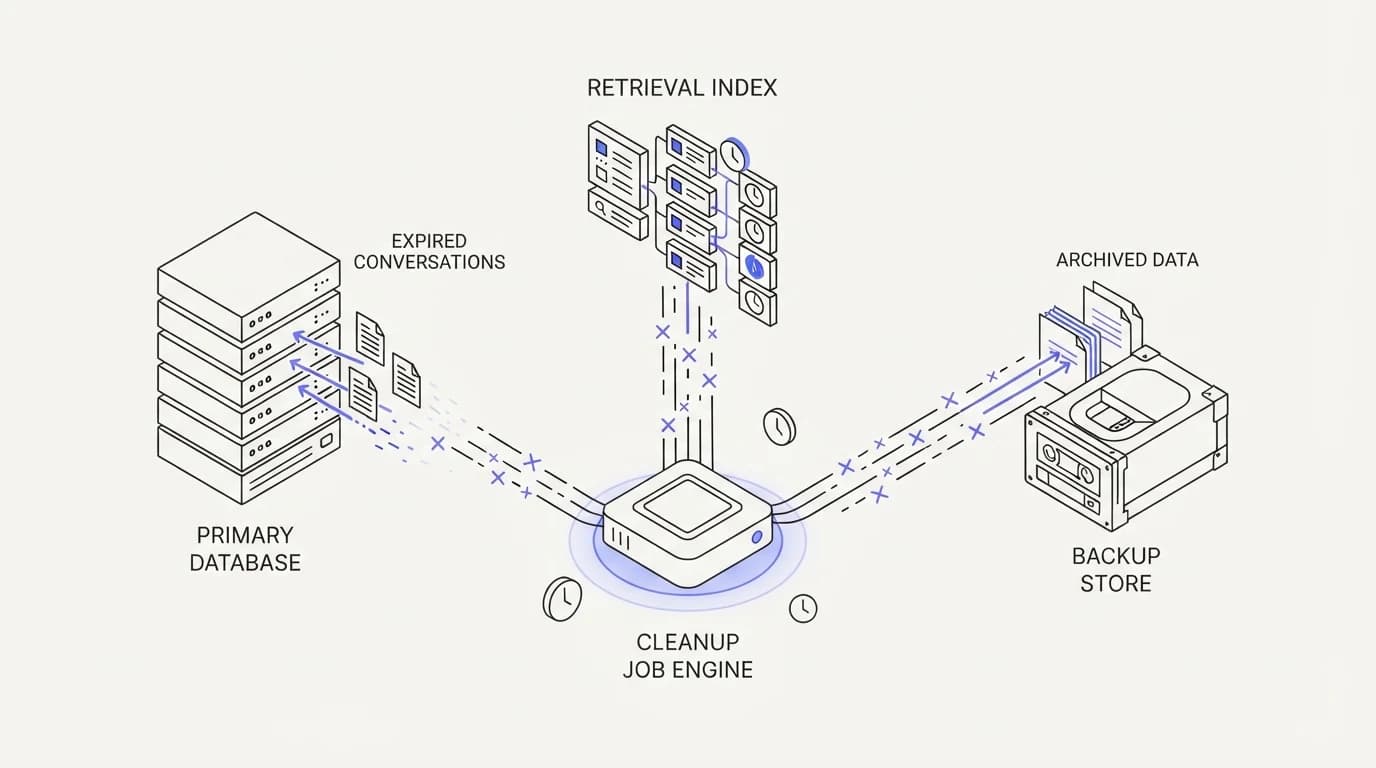
A retention policy is only as real as the deletion job that enforces it. Setting a number in a privacy notice and never building the mechanism to act on it is the single most common gap between what a company claims and what actually happens to customer data.
Deletion needs to run on a schedule, automatically, without requiring someone to remember. A retention window enforced by a person manually clearing old tickets when they have time is not a policy, it is a hope, and it will not survive an audit or a data subject access request asking why a three-year-old conversation still exists.
Deletion needs to reach every location the data lives in, not just the primary database. If a conversation is deleted from the transcript view but its content remains embedded and retrievable from the retrieval index, the deletion has not actually happened from the customer's perspective, and from a regulator's perspective it likely has not happened at all.
Deletion needs a defined process for backups, either a shorter backup retention window that ages out on its own, or an active purge process that reaches archived copies. This is the detail most retention policies leave vague, and it is the detail a determined data subject access request will eventually surface.
Balancing usefulness against the legal minimum
The instinct to keep everything indefinitely, in case the AI agent might need it, is understandable and usually wrong. Most of the value an AI agent gets from history comes from a curated knowledge layer, built deliberately through training on your help center and documented answers, not from raw transcripts sitting unused for years.
Test this directly before defaulting to indefinite retention. Look at how often a support conversation genuinely gets referenced after 90 days versus how often it just sits there. For most support operations, the answer is that almost all practical value is captured in the first few months, and the tail beyond that is legal risk without a matching benefit.
Where genuine long-term value exists, capture it deliberately as a knowledge artifact rather than keeping the raw personal data around indefinitely as a side effect of inertia. A recurring question that keeps coming up is worth turning into a permanent help center article through your data sources connection, which then needs none of the same retention math the original raw conversation does.
 Communicate.so
This reframing also changes how a retention decision feels internally. Deleting a raw transcript stops looking like discarding institutional knowledge once the team trusts that anything genuinely reusable has already been captured as a knowledge artifact, separate from the personal data it originated from.
Where communicate.so stands, honestly
Communicate.so's current data handling posture is described on the security page, covering encryption at rest and workspace isolation, but a fully category-by-category, published retention schedule of the kind this guide recommends is not yet public in the level of detail described here. That is a specific gap worth naming rather than implying the policy is more granular than it currently is.
If your organization requires a documented retention schedule broken out by data category as part of a vendor review, ask directly for the current numbers rather than assuming they match the framework in this guide. This article is a framework for setting a defensible policy, not a substitute for confirming any specific vendor's actual current practice in writing.
The same request applies to any other vendor in your stack, not just the AI layer. A retention policy is only as strong as its weakest connected system, and a support tool that deletes on schedule while a downstream analytics export or a connected CRM keeps the same data indefinitely has not actually solved the problem, only moved it.
Key takeaways
- GDPR and CCPA do not set a fixed retention number. Both require a purpose-linked period that is documented, disclosed, and actually enforced through deletion.
- An AI agent creates a legitimate case for retaining some data longer, but only under a separately disclosed purpose, not as a silent extension of the original support window.
- Conversation data lives in at least four places: raw transcripts, the retrieval index, analytics aggregates, and backups, each needing its own retention treatment.
- The EU AI Act six-month log retention floor applies to high-risk systems specifically, not automatically to a general customer support chatbot.
- A retention policy is only real if a scheduled, automated deletion process reaches every location the data lives in, including backups.
Setting a defensible retention window starts with splitting your data by category and confirming which framework actually applies to your use case. Review the security posture of any vendor in your stack, and pair this guide with GDPR and AI customer support before finalizing a policy your legal team will have to defend.
Frequently asked questions
How long should I retain customer support chat data?
There is no universal number. GDPR and CCPA both require the period be tied to a stated purpose, documented, and enforced through actual deletion, not a fixed length every business must follow. A workable starting point is 90 days to 12 months for general resolved conversations, adjusted for your specific purpose and confirmed against GDPR storage limitation guidance for your jurisdiction.
Does GDPR require me to delete data after a fixed period?
No fixed period is mandated. Article 5(1)(e) requires that personal data not be kept longer than necessary for the purpose it was processed for, which means you set and justify the period, then enforce it through actual deletion. The absence of a fixed number does not mean the absence of an obligation.
Can I keep conversation data longer to train or improve my AI agent?
Only under a separately disclosed purpose. If your privacy notice states data is retained to resolve the current issue, using it afterward to improve an AI agent is a different purpose that needs its own disclosure and retention justification, not an automatic extension of the original window.
What happens to retention if a conversation includes health information?
If HIPAA applies, compliance documentation including audit logs of protected health information access must be retained for at least six years, per HIPAA requirements. This is a minimum for specific compliance records, separate from and often longer than the general chat retention window you set for non-health conversations.
Does the EU AI Act require six months of log retention for every AI support chatbot?
No. The six-month log retention floor under Article 26(6) applies to deployers of high-risk AI systems as the Act defines them, not automatically to a general customer support chatbot. Confirm your system's classification before assuming this floor applies to you.
What is the difference between deleting data and anonymizing it?
Deleting removes the data entirely. Anonymizing strips identifying details so the remaining content can no longer be tied to a specific person, at which point it generally falls outside personal data protection obligations entirely. A knowledge base article generalized from a real conversation, with names and account details removed, is anonymized content, not personal data on a retention clock.
If I delete a conversation from my support dashboard, is it actually gone?
Only if the deletion reaches every location the data lives in: the primary database, the retrieval index if the content was embedded, and backups. Deleting a visible record from a dashboard while the same content remains searchable through retrieval or recoverable from a backup is not a complete deletion.
Do I need a different retention policy for each channel, like email versus chat?
The underlying legal principle is the same across channels: retention tied to purpose, documented, and enforced. In practice, different channels often carry different data, so the specific window can reasonably differ, but the requirement to justify and enforce a period applies uniformly regardless of channel.
What should a data retention disclosure to customers actually say?
At minimum, name the category of data, the retention period or the criteria used to determine it, and the purpose it is retained for. CCPA specifically requires disclosing how long each category of personal information is retained, or the criteria used to determine that period, which is a higher bar than a vague statement that data is kept as long as necessary.
Can backups keep data past my stated retention window?
Backups holding deleted data past the stated window are a common and real compliance gap. A defensible policy either sets a backup retention window shorter than or equal to the primary retention window, or includes an active process to purge deleted records from backups on the same schedule, not an indefinite backup exception.
Is aggregated analytics data subject to the same retention rules as conversation transcripts?
Generally no, if the aggregation genuinely removes identifiable content and cannot be reversed to reconstruct individual conversations. A dashboard tracking deflection rate or average handle time over time is typically not personal data at the aggregate level, which is why analytics retention can often outlast raw conversation retention without the same purpose-limitation concern.
What retention period should apply to card numbers mentioned in a support chat?
Under PCI DSS, sensitive authentication data like a CVV cannot be stored after the immediate transaction, and any stored primary account number must be minimized to what is required for a legitimate purpose. In practice, most support conversations have no legitimate purpose to retain a full card number at all, which is covered in depth in PII redaction for customer support.
How often should a retention policy be reviewed?
At minimum annually, and any time a new data source, channel, or AI feature is added to the support stack. A retention policy written before an AI agent started embedding conversations into a retrieval index, and never revisited, is very likely out of date for what the system actually does today.
What is the risk of over-retaining data beyond what regulators enforce?
Beyond direct regulatory risk, every additional month of retained personal data is additional exposure if a breach occurs, since a smaller retained dataset limits what an attacker can access. Storage limitation is as much a security posture decision as a compliance one, a framing the security conversation for any vendor should include alongside encryption and access controls.
Should retention periods differ for B2B versus B2C support conversations?
The underlying principle is the same, but the practical numbers often differ because B2B relationships frequently carry longer legitimate business purposes, such as account history relevant to a multi-year contract, than a one-time B2C support interaction. Justify the specific period against the specific relationship rather than applying a single number to both.
Does deleting a customer conversation break the AI agent's ability to help future customers?
Not if the stack separates raw conversation data from the curated knowledge layer correctly. Deleting an individual customer's raw transcript should not remove the general answer that conversation contributed to a help center article, because that knowledge was deliberately generalized through training on your help center and no longer depends on the original personal data.
What is the first step to building a real retention policy instead of a stated one?
Inventory every location conversation data actually lives, including the retrieval index and backups, before writing a single retention number. A policy written against an assumed architecture that does not match the real one will fail the moment someone checks whether deletion actually reaches every location the data lives in.
Does CCPA require a specific retention number the way some assume it does?
No. CCPA requires that retention be reasonably necessary and proportionate to the disclosed purpose, with no fixed timeline mandated by the statute itself. What it does require is disclosure: a business must state how long each category of personal information is retained, or the criteria used to determine that period, directly to consumers.
Can I set one retention window for my whole support stack instead of splitting it by category?
A single blanket window is simpler to state but harder to defend, because it either deletes data with a legitimate longer purpose too early or retains data with no remaining purpose too long. Splitting by category, as this guide recommends, is more work upfront and produces a policy that actually matches how the data is used.
Who inside a company should own the retention policy?
Ownership works best as a shared responsibility between whoever owns privacy or legal compliance and whoever owns the support engineering stack. The legal side sets the defensible period per category, and the engineering side confirms the deletion mechanism actually reaches every location the data lives in, including the retrieval index and backups.