
Ecommerce customer support AI: fix the action problem first
 Communicate.so
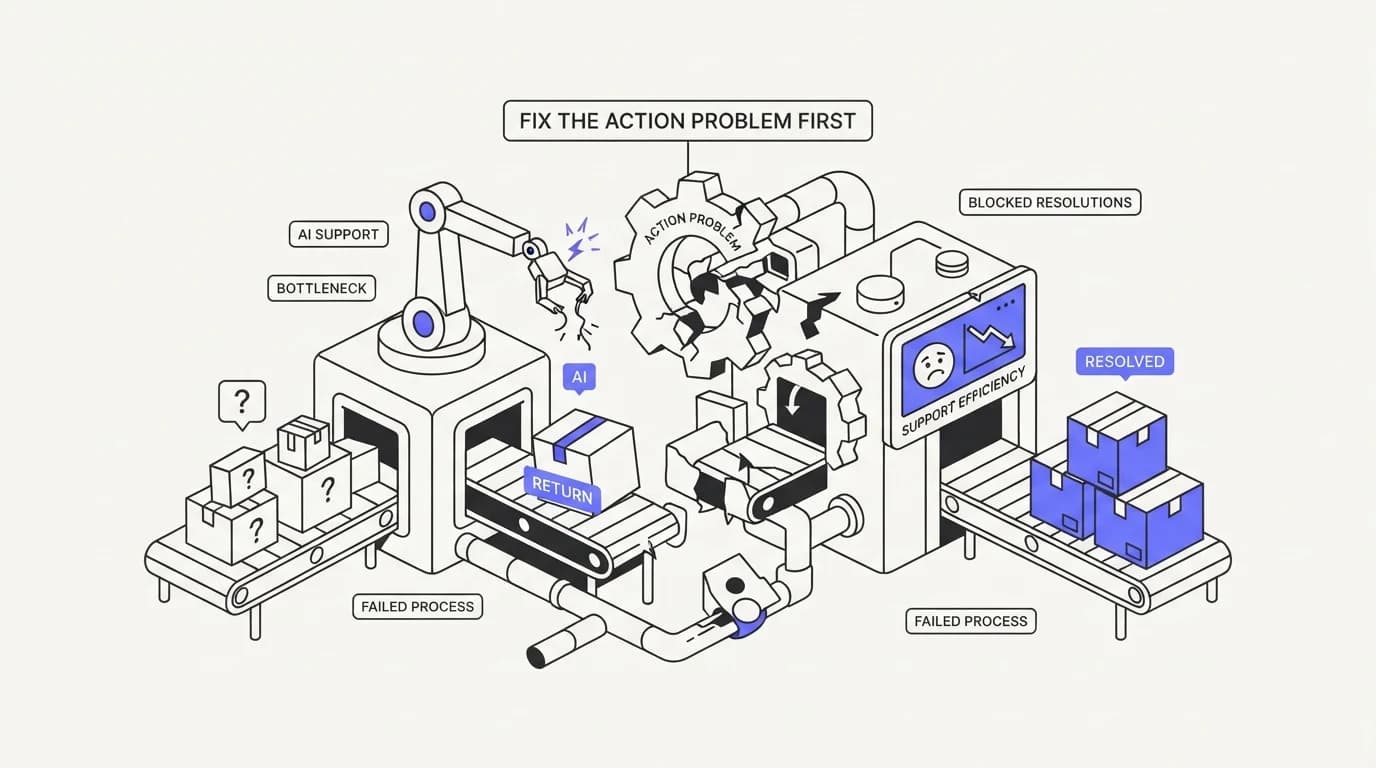
Ecommerce customer support AI that only answers questions misses most of the queue. WISMO needs order lookup, not a smarter chatbot.
TL;DR: Ecommerce customer support AI usually gets sold as a smarter chatbot, and that framing misses the actual bottleneck. The single biggest category of ecommerce support volume is WISMO, where is my order, and ShippyPro's 2026 guide puts it at roughly 20 to 40 percent of ecommerce support tickets in normal weeks, climbing past 50 percent during peak shopping periods. A WISMO question is not a knowledge gap the model needs to reason its way through. It is a lookup: pull the order, check the carrier status, tell the customer where the package is. An AI agent that can only answer from documentation will handle policy questions fine and then stall on the exact question that dominates the queue, because the answer lives in your order management system, not your help center. This guide lays out why ecommerce support is an action problem before it is a knowledge problem, what a working setup actually connects, and where a chat-only tool quietly falls short.
Every ecommerce team that adds an AI agent expects it to answer FAQ-style questions about returns, sizing, and shipping policy, and it usually does that well. The surprise comes a week later, when the largest single bucket of incoming messages turns out to be a customer asking one specific thing: where is my order. That question needs a live answer from a live system, not a paragraph pulled from a help article, and the gap between the two is where most ecommerce customer support AI deployments underperform.
This guide is written for the person who owns that queue: a founder running support themselves, an ops lead watching WISMO eat the team's day, or a support manager choosing between chatbot vendors that all claim to handle ecommerce. It walks through why WISMO is an action problem, what data an agent actually needs connected to resolve it, how returns and exchanges add a second action layer on top, and how to think about peak-season spikes without over-hiring for the other fifty weeks of the year.
The position this guide takes is direct. A model upgrade does not fix a WISMO queue. An AI agent connected to your order and shipping data does, because the bottleneck was never comprehension, it was access.
Get the plumbing right and the smartest available model becomes plenty smart enough for the job in front of it.
Why WISMO dominates ecommerce support volume
WISMO stands for where is my order, and it is the single most common thing a customer asks a store after checkout. ShippyPro's 2026 guide to WISMO puts the share at roughly 20 to 40 percent of total ecommerce support tickets in a normal week, and notes it climbs past 50 percent during peak periods such as the holiday shipping season (ShippyPro). Salesforce frames the same pattern from the retailer side: order status anxiety is the default state of a customer between checkout and delivery, and it shows up as a support ticket the moment tracking looks stale or a delivery date slips (Salesforce).
The reason WISMO is so persistent has nothing to do with support quality and everything to do with the structure of the purchase itself. A customer pays money, waits days, and has almost no visibility into what is happening to their package in between. Anxiety fills that gap, and the fastest way to relieve it is to ask a human, or a bot, where the thing they paid for actually is.
The mistake many teams make is treating WISMO like every other support category: write a good help article, train the AI agent on it, expect the volume to drop. That approach works for a policy question like return windows, because the answer is static text. It fails for WISMO because the answer is not text at all, it is the current state of a specific order in a specific carrier's system, and no help article can contain the answer to a question that changes by the hour.
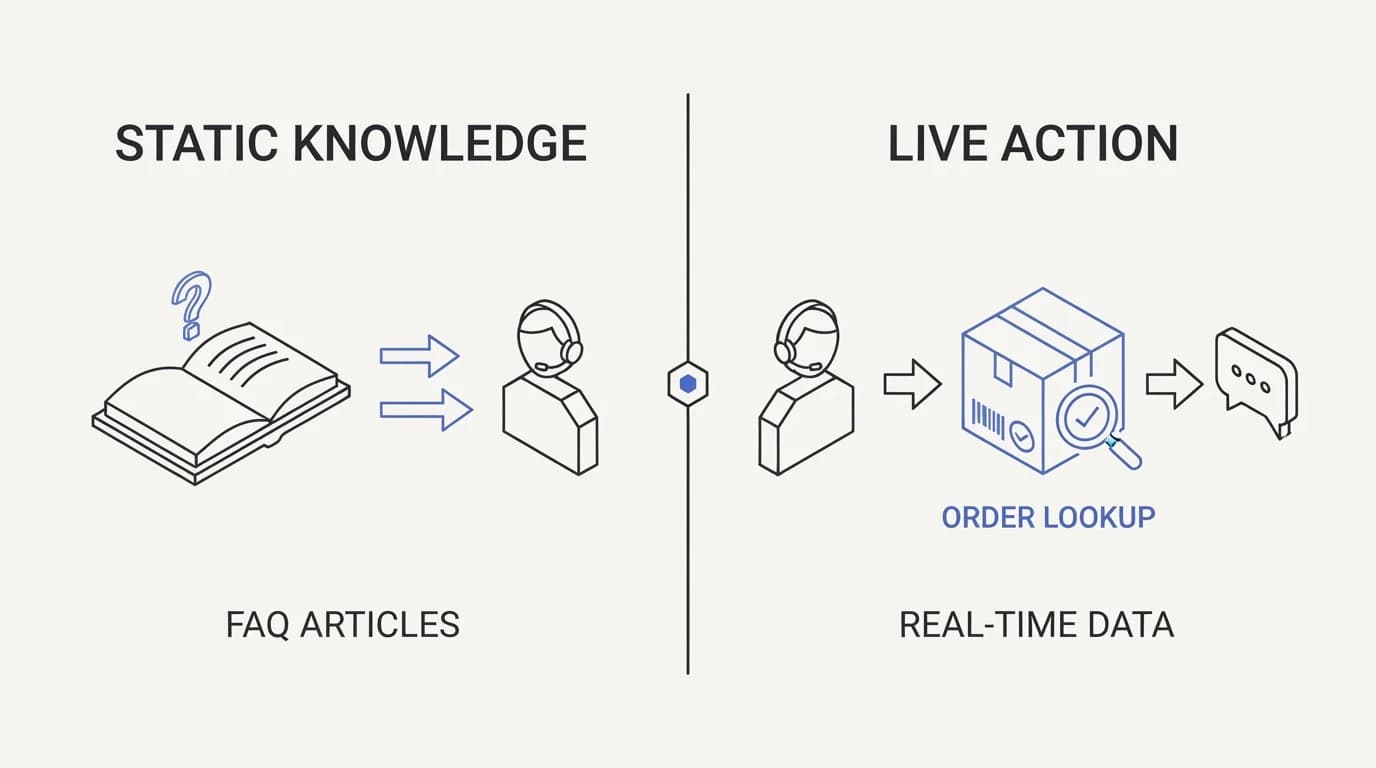
This is the core distinction the rest of this guide works from. A knowledge question has one correct answer that a well-written document can hold indefinitely. An action question has an answer that is true right now and was different yesterday, and answering it correctly requires reaching into a live system rather than recalling a fact.
The knowledge problem versus the action problem
 Communicate.so
Every ecommerce support question falls into one of two buckets, and mixing them up is the most common design mistake. A knowledge question asks something that is true regardless of who is asking or when. What is your return policy, do you ship internationally, what sizes does this jacket come in.
An answer document, once written and kept current, resolves that category completely.
An action question asks something that is specific to one customer's account or order at this exact moment. Where is order 48213, why did my payment fail, can you apply this discount code, what is the status of my return label. These require a system call, not a passage of text, and a RAG pipeline built purely for document retrieval has nowhere to send that call.
The confusion happens because both categories arrive as plain-language chat messages, and a language model is happy to generate a fluent-sounding response to either one. The danger is that a model with no order data will still answer a WISMO question, just wrong, guessing a delivery window instead of stating it does not know. That is a worse outcome than silence, because it reads as confident and it is fabricated.
| Question type | Example | Answer source | Knowledge-only agent |
|---|---|---|---|
| Static policy | What is your return window | Help center document | ✓ |
| Static policy | Do you ship to Canada | Help center document | ✓ |
| Order status | Where is order 48213 | Order management + carrier API | ✗ |
| Order status | Why is my package delayed | Carrier tracking API | ✗ |
| Account action | Can you resend my invoice | Order system lookup + action | ✗ |
| Return action | Start a return for this item | Returns platform + action | ✗ |
The table is the whole argument in one place. Half the rows are questions a well-maintained document answers perfectly, and half require the agent to reach a live system and, in some cases, take an action rather than just report a fact. Actions is the piece that closes that second half, letting the agent look up an order or trigger a return instead of describing what a human would need to do manually.
What order lookup actually requires
 Communicate.so
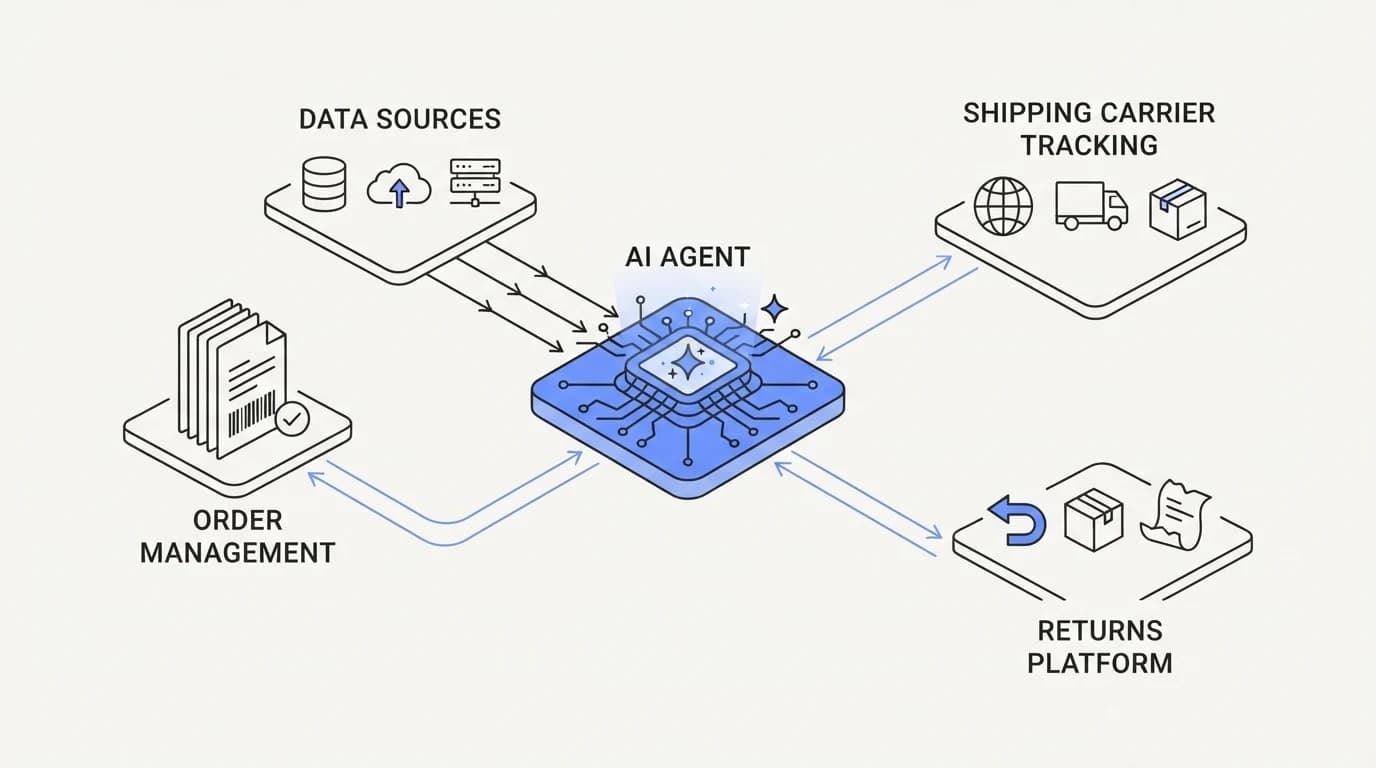
Order lookup sounds like a single feature, but it is really three connections working together. The agent needs the order management system to know what was purchased, the shipping carrier's tracking data to know where the package physically is, and enough identity verification to make sure it is showing the right order to the right customer.
Order management is the anchor. Whether that lives in Shopify, a custom storefront, or a headless commerce platform, the agent needs read access to order status, line items, and payment state so it can answer without asking the customer to repeat information already on file.
Carrier tracking is the piece most knowledge-only chatbots skip entirely. An order marked shipped in your storefront can still be sitting in a warehouse, moving through a hub, or stuck at customs, and only the carrier's live tracking feed knows which. Data sources is the mechanism for wiring that feed in alongside your storefront data, so the agent is reading the same tracking number a human agent would paste into a carrier's website.
Identity verification is the quiet third requirement, and skipping it is a real risk, not a minor gap. An agent that will hand over order details to anyone who types an email address is one social-engineering attempt away from leaking someone else's shipping address or order contents, so a working setup checks order number plus a second identifier, such as email or postal code, before it answers.
Put those three together and a WISMO question resolves in one exchange. The customer asks where order 48213 is, the agent verifies identity, pulls the order and the live tracking status, and answers with the actual carrier update rather than a generic wait line. That single resolved exchange is also what keeps average handle time down, because a human agent doing the same lookup by hand takes minutes, not seconds.
Returns and exchanges: the second action layer
 Communicate.so
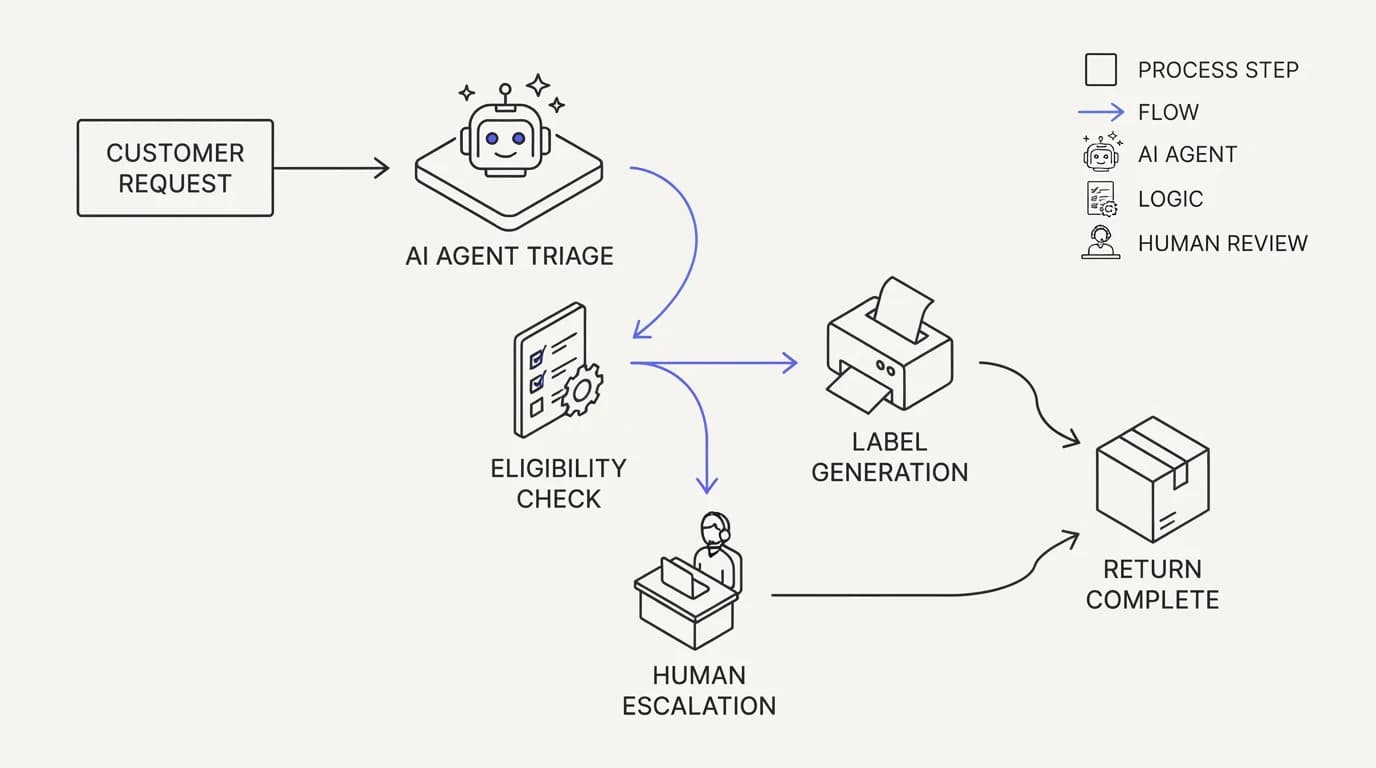
Returns are the second biggest action category after WISMO, and they compound the difficulty because eligibility itself is a live check, not a static rule. A thirty-day return window sounds simple until you have to know the exact delivery date for this specific order, whether the item is on a final-sale list, and whether a return label has already been issued.
A knowledge-only agent can recite the policy: items may be returned within thirty days of delivery. It cannot tell a specific customer whether they are inside or outside that window, because that answer depends on data the policy document does not contain.
A connected agent closes that gap by checking the actual delivery date against the current date, checking the item against any final-sale flags, and then either generating a return label directly or handing the case to a person when the situation is ambiguous. That handoff matters as much as the automation, because a return dispute over a damaged item or a missing box is exactly the kind of judgment call an AI to human handoff should route to a person rather than force through automated logic.
Exchanges add a further wrinkle, because they combine a return action with a new order, and inventory availability for the replacement size or color has to be checked before the agent promises anything. Promising an exchange for an item that is out of stock is a worse outcome than saying nothing, because it sets an expectation the store cannot keep.
The practical takeaway is that returns automation is not a policy problem to solve with better wording. It is an eligibility check plus an action, wired to the same order and inventory data the WISMO flow already needs, so building one well tends to make the other easier rather than doubling the work.
Peak season: modeling the spike, not the average day
 Communicate.so
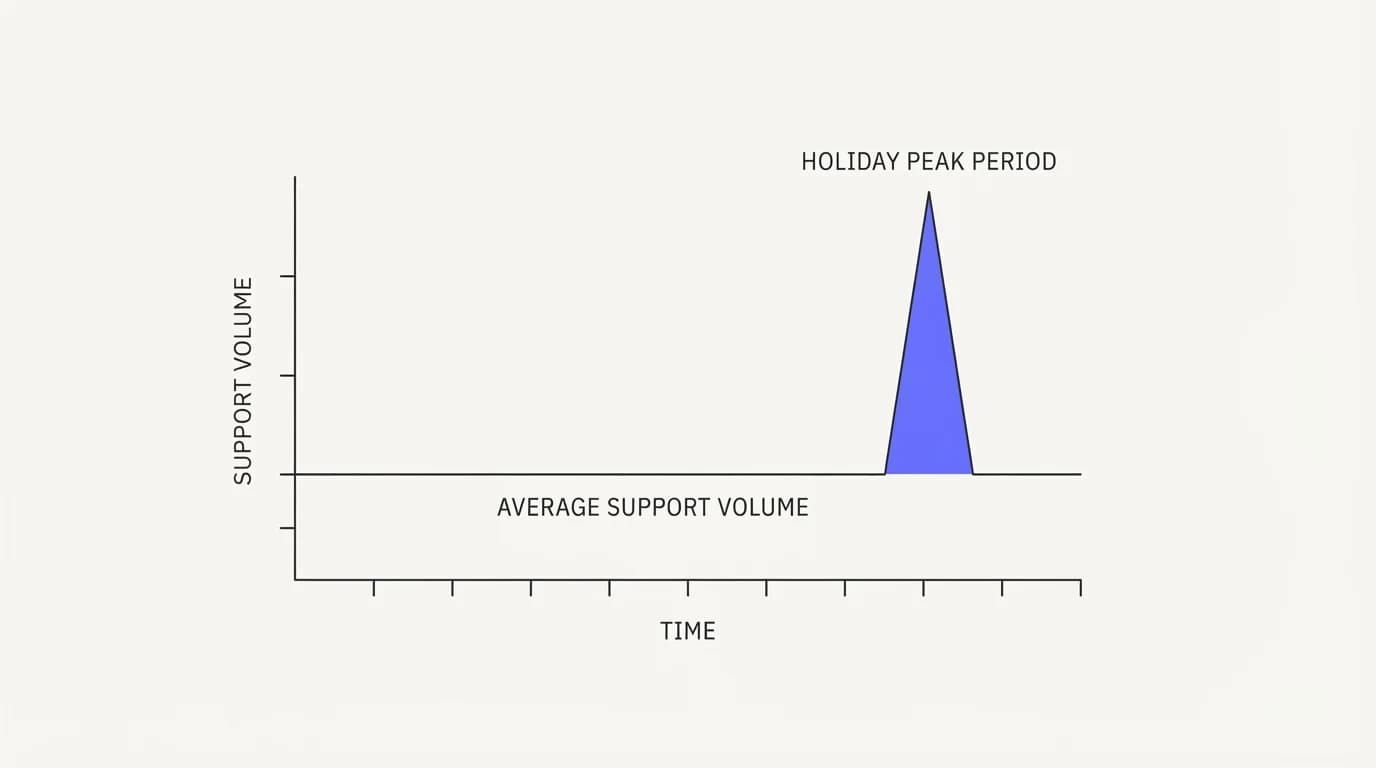
Ecommerce support has a seasonality problem that most other industries do not face at the same intensity. Volume on an average Tuesday can be a fraction of volume on the Monday after a holiday sale, and WISMO is the category that spikes hardest, because shipping networks slow down exactly when order volume peaks.
ShippyPro's 2026 WISMO guide notes the same 20 to 40 percent baseline share can climb past 50 percent of total ticket volume during peak shipping windows (ShippyPro), which means the category that is already your largest bucket doubles its share exactly when your team has the least slack to absorb it. Staffing for the average week and hoping peak season sorts itself out is how support teams end up drowning every fourth quarter.
A connected AI agent changes the math here specifically, because WISMO is the most automatable category in the entire queue. It is a lookup, not a judgment call, so the marginal cost of answering the thousandth order-status question during a peak week is close to zero once the carrier and order connections are live.
This is also where 24/7 coverage earns its keep specifically for ecommerce, because peak-season order anxiety does not clock out at 6pm. A customer checking a delivery status at midnight the night before a gift deadline gets the same live tracking answer they would get at noon, without a human agent working an overnight shift purely to cover order-status questions.
The honest caveat is that peak season also increases the ambiguous cases: lost packages, carrier exceptions, damaged-in-transit claims. Those need a human, and the point of automating the routine 80 percent of WISMO volume is to leave your team enough room to give the genuinely hard 20 percent real attention instead of triaging it between order lookups.
Multilingual and channel coverage for global storefronts
A storefront selling beyond one country inherits a language problem on top of the action problem, because a WISMO question in Spanish or German still needs the same order and carrier lookup, just phrased differently. An agent handling multilingual customer support has to keep the underlying order lookup identical across languages, not translate the policy text and leave the action layer English-only.
Channel coverage matters just as much as language, because ecommerce customers do not all default to email. Some open a web widget mid-checkout, some message through a chat app already installed on their phone, and a customer who has to switch channels to get a status update is a customer who has already had a worse experience than the delay itself caused.
For stores whose customers lean on messaging apps rather than email, WhatsApp AI customer support extends the same order-lookup agent into the channel where the conversation is already happening, rather than asking the customer to open a separate app to check a tracking number they could have asked about where they already are.
Choosing an ecommerce support tool: what to check before you buy
Most ecommerce support tool comparisons focus on chat widget design and pricing tiers, and skip the question that actually determines whether the tool will resolve WISMO. Before evaluating anything else, confirm the tool can read live order status and carrier tracking, not just answer from a help center.
Ask three concrete questions of any vendor. Can the agent look up a specific order by number and verify the requester's identity before answering. Can it read live carrier tracking rather than the last status your storefront cached.
Can it check return eligibility against the actual delivery date rather than reciting the policy window.
If a vendor's demo only shows the agent answering FAQ-style policy questions, that is a signal worth noticing, not a disqualifier on its own. It means the harder half of the evaluation, the order and carrier connections, has not been shown yet, and it is worth asking to see specifically before committing.
Teams migrating off a legacy helpdesk built for ecommerce specifically, such as Gorgias, are usually migrating because they want the action layer to extend further than templated macros allow. The Gorgias alternative comparison covers that migration path in more depth if that is the specific evaluation you are running.
Where Communicate fits, honestly
Communicate is a grounded AI agent that connects to your store's order data and content through data sources, and it can take scoped actions like looking up an order or starting a return rather than only describing what to do next. For a store whose queue is dominated by WISMO and return-status questions, that is the specific gap this guide has been describing.
Here is what it does without embellishment. The live channels are a web widget, live chat, and email, with in-app messages and analytics running from the same agent and knowledge base, so a tracking answer given through the widget is consistent with the same answer given by email.
On honest limits: Communicate does not have prebuilt native connectors for every shipping carrier or ecommerce platform out of the box today, so the order and tracking connection for your specific stack is a setup step, not a magic default, and it is worth confirming against your platform before assuming coverage. There is no WhatsApp, Messenger, SMS, or voice channel, so a store that leans heavily on messaging apps should check WhatsApp AI customer support for that specific channel need. Entry is a one-time $1 activation with 100 test credits, detailed on the pricing page, which is enough to run your real WISMO and return questions through it before trusting it live.
Key takeaways
- WISMO is roughly 20 to 40 percent of ecommerce support volume in a normal week and can climb past 50 percent during peak shipping periods, per ShippyPro's 2026 WISMO guide.
- A WISMO question is an action problem, not a knowledge problem: the answer requires a live order and carrier lookup, not a passage of text from a help article.
- Returns and exchanges add a second action layer, since eligibility depends on the actual delivery date and inventory, not the policy text alone.
- Peak season doubles the share of your hardest-to-staff category exactly when your team has the least slack, which is where automating the routine lookup share matters most.
- Evaluate any ecommerce support tool on whether it can verify identity, look up a live order, and read carrier tracking, before comparing chat widget design or pricing.
If your queue is dominated by where-is-my-order questions, connect your store's order and carrier data through data sources and test the lookup on your real orders before going live. A one-time $1 activation on the pricing page includes 100 test credits for exactly that.
Frequently asked questions
What is WISMO in ecommerce customer support?
WISMO stands for where is my order, and it is the most common question ecommerce support teams receive after checkout. It accounts for roughly 20 to 40 percent of support ticket volume in a normal week according to ShippyPro's 2026 guide, and it climbs past 50 percent during peak shipping periods (ShippyPro).
Why can a chatbot trained on documentation not answer order status questions?
Because order status is not a fact a document can hold. A help article can state a return policy indefinitely and stay correct, but an order's location changes hour to hour as it moves through a carrier network. A chatbot restricted to document retrieval has no live system to check, so it either refuses to answer or, worse, guesses a delivery estimate that may be wrong.
What data does an AI agent need to resolve a WISMO question?
Three things: read access to the order management system for what was purchased, live carrier tracking for where the package physically is, and an identity check such as order number plus email so the agent shows the right order to the right person. Data sources is the mechanism for connecting the first two.
Is order lookup an action or a knowledge task?
It is an action task. The agent has to reach into a live system and retrieve current state, then optionally take a further action like generating a return label. Knowledge tasks resolve from static text; action tasks require a system call, and treating one like the other is the most common design mistake in ecommerce support automation.
How does AI handle ecommerce returns and exchanges?
A connected agent checks the actual delivery date against the return window, checks the item against any final-sale restrictions, and either issues a return label directly or escalates ambiguous cases like damage claims to a human. Exchanges add an inventory check, since promising a replacement size that is out of stock creates a worse problem than the original question. The AI to human handoff should catch the judgment calls automatically.
Does ecommerce support volume really spike during peak season?
Yes. ShippyPro's 2026 guide notes the WISMO share of tickets can climb past 50 percent during peak shipping periods such as the holiday season, because shipping networks slow down exactly when order volume is highest (ShippyPro). Staffing for an average week and hoping peak season sorts itself out routinely leaves teams underwater every fourth quarter.
What should I check before buying an ecommerce support AI tool?
Confirm it can look up a specific order by number, verify the requester's identity before answering, and read live carrier tracking rather than a cached status. If a demo only shows FAQ-style policy answers, ask specifically to see the order lookup and return eligibility check before committing.
Can AI verify a customer is who they say they are before showing order details?
A working setup should require at least two identifiers, such as an order number plus the email or postal code on file, before returning order details. Skipping that check risks exposing one customer's order information to someone who only guessed or scraped a valid-looking order number.
How much support volume can AI actually deflect for an ecommerce store?
It depends heavily on how connected the agent is, but the routine categories, order status and standard-window returns, are the most automatable share of the queue because they are lookups rather than judgment calls. HappySupport's benchmark work puts typical deflection in the 45 to 60 percent range in year one for grounded agents, rising further as the setup matures (HappySupport).
Does WhatsApp matter for ecommerce customer support?
For stores whose customers lean on messaging apps rather than email, yes. A customer who has to leave WhatsApp and open a separate app to check a tracking number has already had a worse experience than the shipping delay caused. WhatsApp AI customer support covers extending the same order-lookup agent into that channel.
How does multilingual support affect ecommerce WISMO handling?
A store selling across borders needs the order and carrier lookup to work identically regardless of the language the question arrives in. Multilingual customer support covers keeping that action layer consistent rather than only translating static policy text.
What happens when an ecommerce AI agent cannot resolve a return dispute?
It should escalate to a person rather than force a decision through automated logic. Damage claims, missing-item disputes, and edge cases outside standard policy are judgment calls, and a well-designed AI to human handoff passes the full conversation context along so the human does not start from zero.
Does average handle time actually improve with order-lookup automation?
Yes, because a human agent manually checking an order and a carrier tracking page takes minutes per ticket, and a connected AI agent does the same lookup in seconds. Average handle time reduction covers the mechanism in more depth, and WISMO resolution is one of the clearest cases where the time savings are visible immediately.
Can AI generate a return label automatically?
When the agent is connected to your returns platform and the order qualifies under policy, yes, it can generate and send the label without a human touching the ticket. The boundary is eligibility: an item outside the return window, on a final-sale list, or flagged for a dispute should route to a person instead of an automatic label.
Is 24/7 coverage actually necessary for ecommerce support?
Order anxiety does not follow business hours, and a customer checking a delivery status the night before a deadline benefits from the same live answer they would get at noon. 24/7 customer support AI covers the case for always-on coverage specifically for ecommerce, where peak-hour spikes rarely line up with a support team's shift schedule.
How is ecommerce customer support AI different from a general-purpose chatbot?
A general-purpose chatbot answers from whatever content it was trained on and stops there. Ecommerce support specifically needs a live connection to order management and carrier tracking, because the dominant question category, WISMO, cannot be answered from static content at all. The difference is not conversational polish, it is system access.
What is the biggest mistake teams make when adding AI to ecommerce support?
Treating it purely as a smarter FAQ bot and training it only on help center content. That approach resolves policy questions well and then stalls exactly where the volume is heaviest, because WISMO and return-status questions need order and carrier data the help center was never meant to contain.
Should a small ecommerce store bother automating WISMO, or is it only worth it at scale?
The benefit scales with volume, but even a small store answering the same order-status question dozens of times a week gets real time back from automating the lookup. The setup cost is mostly the initial data source connection, and after that the marginal cost of answering the hundredth order-status question is close to zero regardless of store size.
Does connecting order data to an AI agent create a security risk?
It creates a risk if identity verification is skipped, since order data includes names and addresses. A properly scoped agent checks at least two identifiers before returning order details and only has read access to what it needs, which is the same access-control discipline covered on the security page.
How do I know if my ecommerce support AI setup is actually working?
Track how many WISMO and return-status conversations resolve without a human touching them, and watch what happens to that number during a peak-volume week specifically, since that is when a knowledge-only setup breaks down fastest. Analytics on resolution rate by category is the clearest signal, more useful than an overall satisfaction score that blends every question type together.