
Intercom Fin vs Zendesk AI: comparing two different numbers
 Communicate.so
Intercom Fin bills per resolution while Zendesk reports a 41.2% enterprise median deflection rate. Compare the two on the metric that actually matters.
TL;DR: Intercom Fin and Zendesk AI both claim to resolve customer tickets without a human, but they report success with different math. Fin charges per resolution and defines a resolution as a conversation the customer did not escalate within a set window. Zendesk reports an enterprise median deflection rate of 41.2%, measured against total ticket volume, according to a 2026 benchmark from Lorikeet. A 70% resolution rate from Fin and a 41% deflection rate from Zendesk are not directly comparable numbers, because the denominator changes what each percentage represents. This guide breaks down both metrics, prices both platforms honestly, and names where each one wins before it looks at where a grounded agent like communicate.so fits into the same decision.
Anyone shopping for an AI support agent runs into the same wall within a week: every vendor quotes a resolution number, and none of the numbers use the same formula. Intercom Fin and Zendesk AI are the two most visible names in that comparison, and the gap between their reported numbers is wide enough to distort a buying decision if you take either at face value.
This is a metric problem before it is a product problem. The fix is to separate what each vendor measures from what the product actually does, then compare features, pricing, and fit on top of that. If you have not read the definitions apart, start with resolution rate vs deflection rate, because the rest of this comparison assumes you know which number you are looking at.
What each vendor is actually measuring
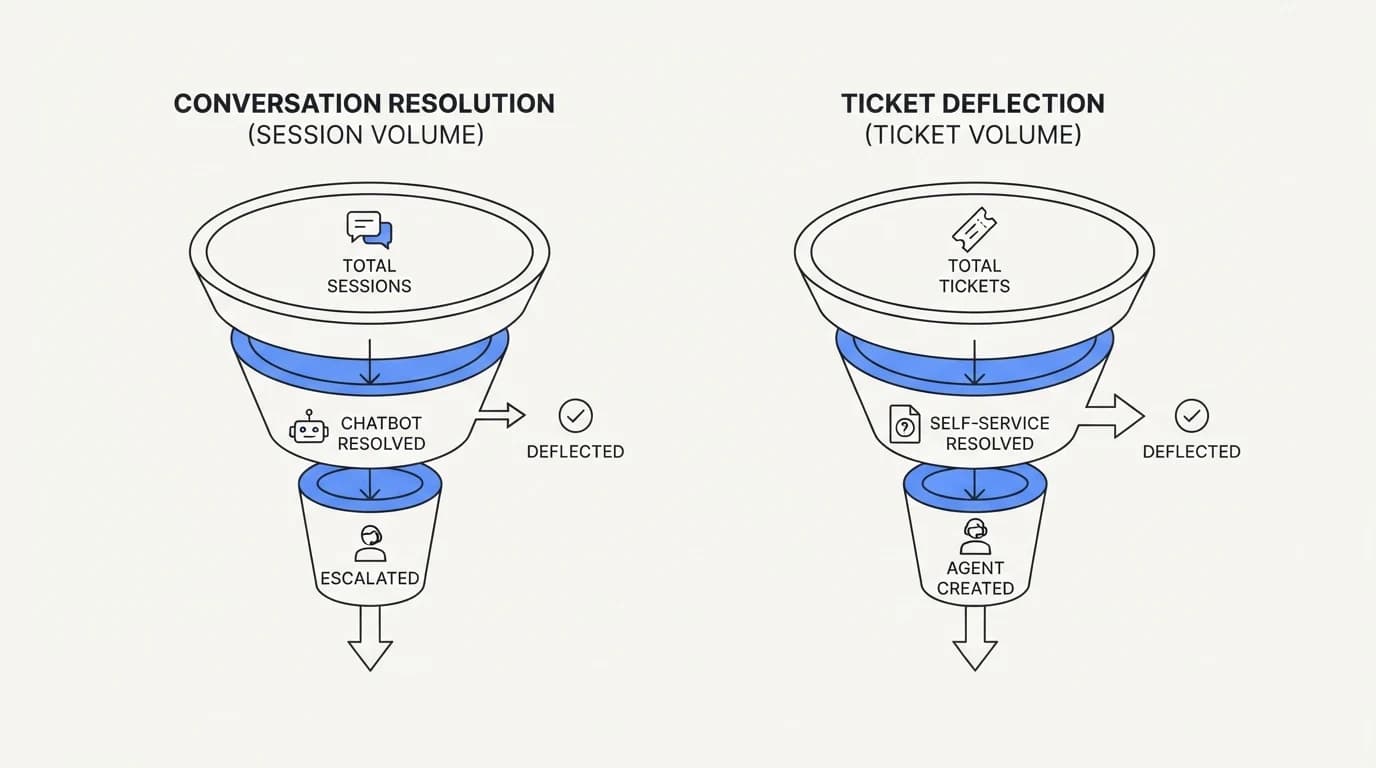
Fin's resolution metric counts a conversation as resolved when the customer does not reopen it or escalate to a human within a defined window after Fin's last reply. That is an outcome measure tied to a single conversation thread.
Zendesk's deflection rate, at least in the benchmark data available, is closer to a volume measure. It counts what share of total inbound tickets never required human handling at all, which includes tickets resolved by AI, self-service links, and macros combined depending on how a given account configures reporting.
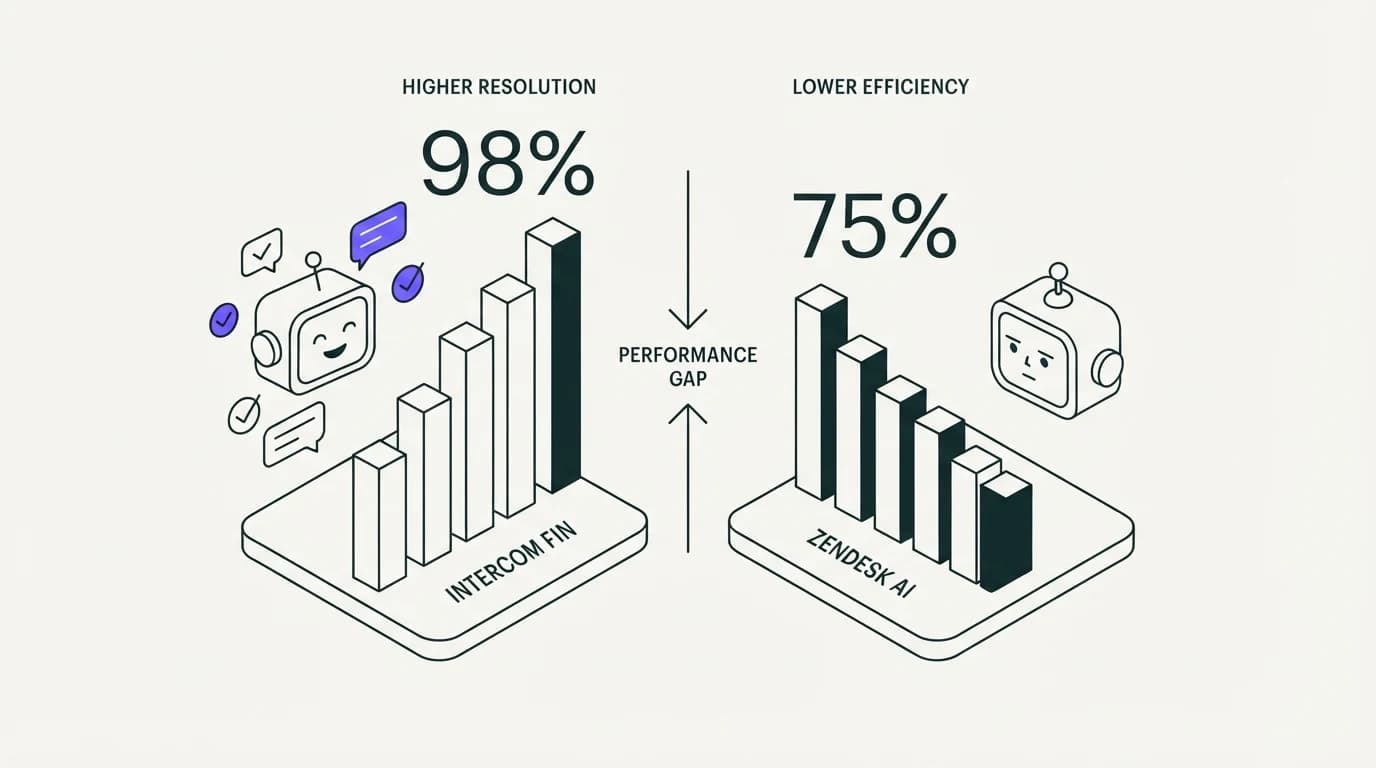
According to a 2026 benchmark report from Lorikeet, the enterprise median deflection rate on Zendesk-reported accounts sits at 41.2%. Vendors marketing pure AI resolution, including Decagon, have advertised deflection figures closer to 80% in the same report, a gap Lorikeet attributes largely to differences in what counts as a deflected ticket rather than differences in model quality.
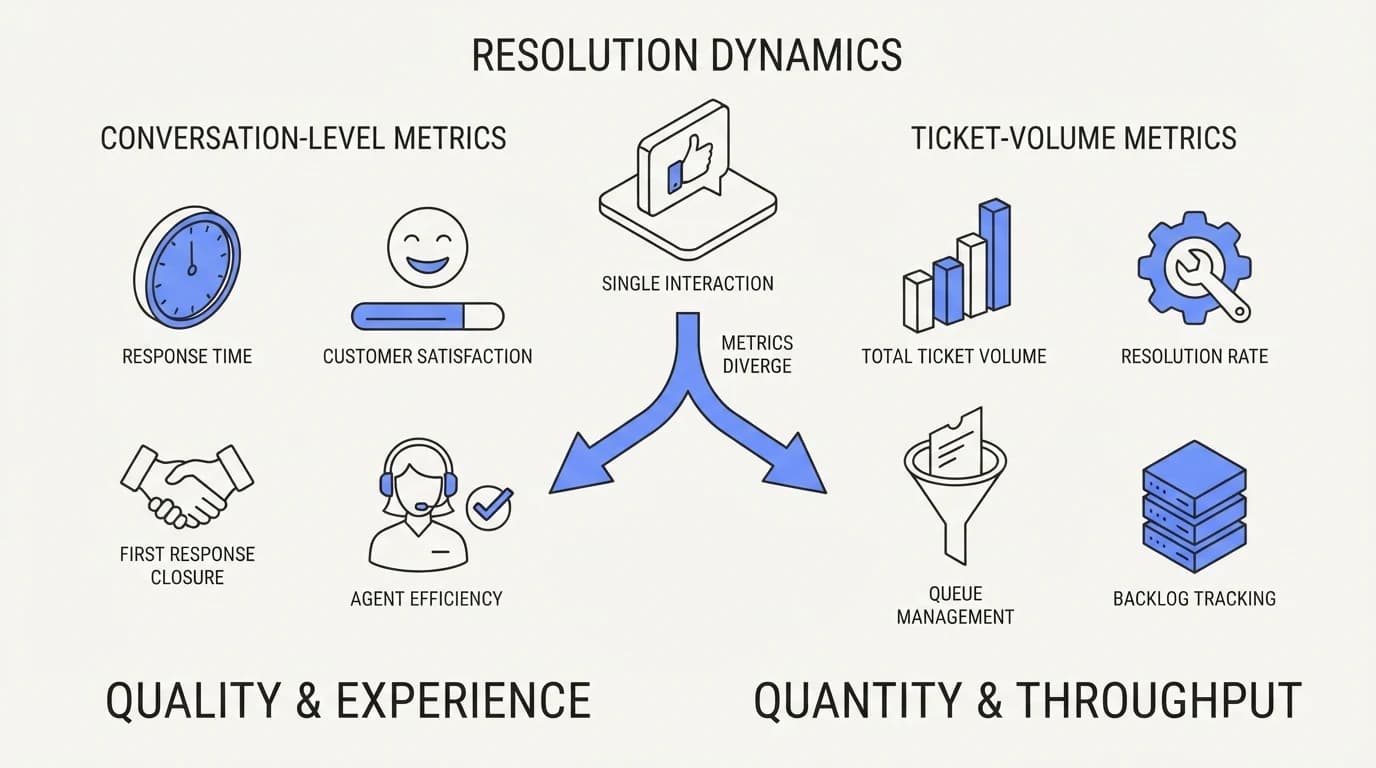
That gap matters because a buyer comparing a vendor's marketed 80% against Zendesk's reported 41.2% median is not comparing two products. They are comparing two denominators. A conversation-level resolution rate from Fin and a ticket-volume deflection rate from Zendesk answer different questions: did this specific conversation end without a human, and did this whole queue avoid human contact.
 Communicate.so
How Fin prices and what that pricing rewards
Fin's pricing model charges per resolution rather than per seat. Each resolved conversation, by Fin's own definition, generates a line item on the bill. This design rewards a high resolution rate on paper, because Fin's own definition of resolved is also the billing trigger.
The practical effect is that a support team on Fin has an incentive to accept Fin's own resolution counting at face value, since the same number both measures success and drives cost. A team serious about AI customer support pricing should ask for the raw reopen and escalation counts behind the resolution number, not just the percentage Fin reports on the dashboard.
A resolution that a customer silently abandons, rather than escalating, still counts as resolved under most window-based definitions. That is not necessarily dishonest. It is a design choice that favors optimism when the customer does not come back, which happens for reasons that have nothing to do with satisfaction.
How Zendesk reports deflection and where it can mislead
Zendesk's deflection reporting mixes contributions from AI answers, help center self-service, and macros in ways that vary by account configuration. A 41.2% median deflection rate, per the Lorikeet benchmark, describes the blended outcome across a large sample of enterprise accounts, not a single AI model's individual hit rate.
That means two Zendesk accounts with identical AI configurations can report different deflection rates purely because one has a stronger help center feeding self-service deflection and the other does not. A buyer evaluating Zendesk AI specifically, separate from the rest of the deflection stack, needs the AI-only breakdown, which Zendesk does provide in account-level reporting but does not lead with in marketing materials.
| Dimension | Intercom Fin | Zendesk AI |
|---|---|---|
| Metric reported | Per-conversation resolution rate | Ticket-volume deflection rate |
| Pricing model | Per resolution | Seat plus AI add-on |
| Includes self-service in reported number | ✗ | ✓ |
| Enterprise median available (Lorikeet 2026) | ✗ vendor figure only | ✓ 41.2% |
| Native shared inbox | ✓ | ✓ |
| Escalation path when resolution fails | ✓ | ✓ |
| Grounds answers in your own content by default | ✓ | ✓ with setup |
Where each platform genuinely wins
Fin's per-resolution pricing suits a team with unpredictable or seasonal volume, because cost tracks usage instead of headcount. It also suits a team that wants a single AI-first surface without adopting a full Zendesk ticketing stack underneath it.
Zendesk AI suits a team already running Zendesk for ticketing, since the AI layer sits on infrastructure the team has already paid for and configured. Ripping out an established Zendesk deployment to chase a cleaner resolution metric rarely pays for itself inside a year.
Neither platform is the automatic answer for a team that wants the agent grounded specifically in its own help center and product data rather than a generic model with a document upload. That is the gap communicate.so targets, by building the agent around your actual data sources instead of a bolt-on knowledge layer.
 Communicate.so
A worked example with the same 1,000 tickets
Take a support queue of 1,000 tickets in a month. If 600 are handled entirely by AI with no reopen, both Fin and Zendesk would likely report a favorable outcome, but the number attached to it differs by design.
Fin reports 600 resolutions and bills for 600. Zendesk, if 150 of those 600 were actually resolved by a help center article a customer found on their own rather than by the AI agent replying, reports a 60% deflection rate that includes work the AI model did not do.
This is not a flaw unique to Zendesk. It is the structural risk of any metric that blends channels. The fix, regardless of vendor, is to ask for the AI-only breakout before accepting a headline percentage, a practice covered in more depth in resolution rate vs deflection rate.
The billing risk hiding in per-resolution pricing
Per-resolution pricing can produce a bill that scales faster than a team expects, because it scales with contact volume rather than with headcount or plan tier. A viral spike in traffic that generates a wave of easy, repetitive questions can drive resolution volume, and cost, up sharply even when nothing about the support operation has changed.
A seat-based or tiered model, by contrast, has a cost ceiling a finance team can predict months in advance. The tradeoff is that a seat-based model does not automatically reward efficiency the way a per-resolution model does.
Teams evaluating either pricing structure should model both against last year's actual ticket volume, not against a vendor's demo numbers. The AI customer support cost breakdown walks through building that model with real inputs.
What to ask both vendors before signing
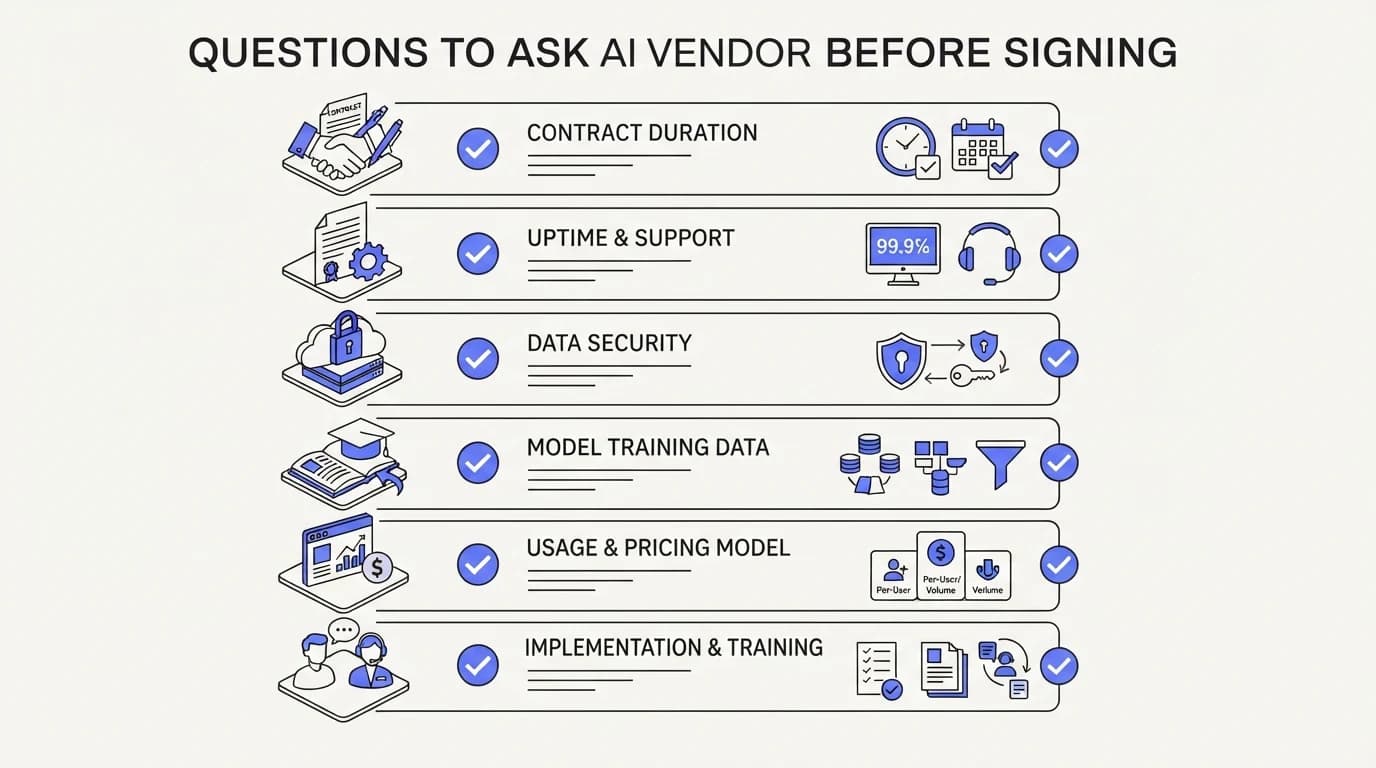
Ask for the raw counts behind any headline percentage: total conversations, resolutions by the vendor's own definition, reopens, and escalations. A vendor that cannot produce these numbers broken out by channel is asking you to trust a summary statistic it controls.
Ask specifically whether the reported resolution or deflection number includes self-service deflection that happened without the AI agent replying at all. If the answer requires clarification from support, that itself is a signal about how the metric is built.
 Communicate.so
Switching costs both vendors leave out of the sales pitch
A vendor demo shows a clean install against a fresh account. A real migration means exporting years of macros, tags, and routing rules from an existing helpdesk, then rebuilding them in the new system before the AI layer has anything to work with.
Teams moving off Zendesk toward a Fin-first setup often underestimate how much of their existing automation lived in Zendesk triggers and views, none of which transfers automatically. The same is true in reverse for a team adopting Zendesk AI on top of an existing Intercom deployment.
A realistic migration plan budgets two to four weeks of parallel running, where both systems stay live while the team validates that the new AI layer answers correctly against the same ticket types the old one handled. The AI support agent implementation guide covers that parallel-running approach in more detail.
Neither Fin nor Zendesk AI publishes a standard migration timeline, because the real number depends entirely on how much custom routing logic the outgoing system carried. A support lead should ask the incoming vendor for reference timelines from at least two comparably sized past migrations, not a generic estimate.
How escalation design differs between the two platforms
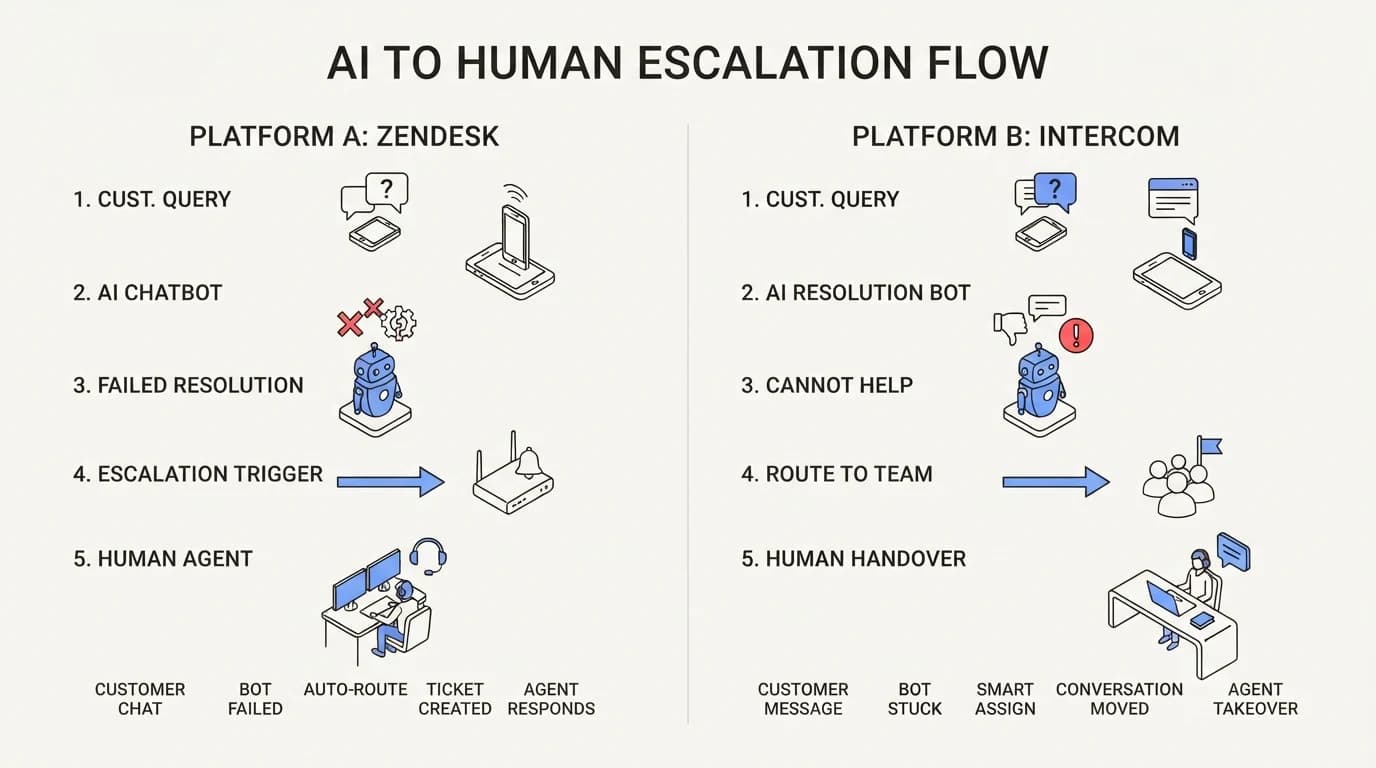
Fin's escalation path routes a failed resolution into Intercom's native inbox, where a human agent sees the full conversation history and Fin's confidence signal on why it did not resolve the ticket. The handoff is inside a single product, which keeps context intact.
Zendesk AI escalates into standard Zendesk tickets, which then flow through whatever routing rules the account already has configured. That can mean a stronger fit for teams with complex existing routing, since the AI escalation slots into logic that already exists rather than requiring new rules.
The quality of escalation design matters more than either vendor's marketing suggests, because a customer who hits a bad handoff after a failed AI resolution often rates the entire interaction poorly regardless of how good the AI's first attempt was. AI human handoff support covers what a clean handoff needs structurally, independent of which vendor builds it.
A support team should test the escalation path directly before signing, not just the resolution path. Send a genuinely hard, ambiguous ticket through each platform's trial and watch what the human agent receives on the other side. A vendor that hands off a bare transcript with no summary or confidence signal is going to slow down the human agent it claims to be helping.
 Communicate.so
Reading the two numbers together instead of picking one
The most useful comparison is not Fin's resolution rate against Zendesk's deflection rate directly. It is each platform's AI-only resolution rate, measured the same way, against your own historical ticket data, run as a trial with both vendors over the same 30 day window.
Vendors resist this kind of side-by-side trial because it removes their control over which numbers get reported. A vendor confident in its actual performance, rather than its marketing definition, should have no objection to a fair concurrent trial against real tickets.
Teams that run this kind of trial consistently report that the gap between vendors narrows once both are measured on the same denominator, which supports the core claim in the Lorikeet benchmark: most of the reported difference between an 80% marketed figure and a 41.2% enterprise median comes from measurement, not from a large gap in underlying model quality. See support ticket deflection rate for the mechanics of running that kind of trial.
How team size and structure change which platform fits
A five-person support team evaluating Fin usually cares more about speed to a working setup than about deep customization, because there is no dedicated admin who can spend weeks tuning routing rules. Fin's tighter, more opinionated product surface fits that team well, since fewer configuration decisions means fewer ways to get the setup wrong.
A fifty-person support organization already running complex Zendesk routing, triggers, and views has a different constraint. Ripping out that infrastructure to adopt a cleaner resolution metric elsewhere means rebuilding rules that took years to accumulate, and the AI add-on approach lets that team keep the routing logic while layering AI resolution on top of it.
Team structure also affects who reviews AI answers before they reach a customer. A small team without a dedicated QA function benefits from a platform with strong default guardrails, since nobody is checking every transcript by hand. A larger team with a QA function can tolerate a rawer setup because a human reviews samples of both platforms' output on a schedule, a practice covered in support quality assurance AI.
Neither platform publishes a recommended team size threshold, because the real variable is not headcount but how much existing process the team is willing to either replicate in a new tool or abandon for a fresh start.
What changes when volume spikes without warning
A viral moment, a product outage, or a press mention can multiply ticket volume overnight, and the two pricing models respond to that spike in opposite ways. Fin's per-resolution billing means the invoice rises in direct proportion to the spike, which is predictable in structure even if the total is not predictable in advance.
Zendesk's seat-based core pricing does not move during a spike, but the AI add-on portion, if metered separately, can still scale with usage depending on the specific plan. A team should confirm directly with Zendesk sales whether their specific AI tier is seat-based, usage-based, or a hybrid, since this detail is not always obvious from public pricing pages.
A spike is also where escalation design gets tested hardest, because a flood of tickets means a flood of edge cases the AI was not built for, which in turn means a flood of handoffs to a human team that is already stretched. The 24/7 customer support AI approach to always-on coverage becomes most valuable exactly during these unpredictable spikes, not during an average Tuesday.
Where communicate.so fits this comparison
Communicate.so does not report a blended deflection number by default. It reports conversation-level outcomes, similar in structure to Fin's approach, but grounds every answer in data sources you connect directly, including your help center, product data, and ticket history, rather than a document upload a customer has to hope is current.
For a team migrating off either Intercom or Zendesk specifically because the reported numbers do not match what support agents see day to day, the practical fix is measuring the same 1,000 tickets against a consistent, disclosed definition before comparing platforms again.
What a contract should require before you sign
A contract with either vendor should specify the exact formula behind any resolution or deflection figure referenced in the sales process, in writing, not just verbally from a sales representative. Verbal claims about an 80% resolution rate mean little if the contract itself is silent on how that number is calculated.
Ask for a right to audit raw conversation logs on a recurring basis, not just a summary dashboard, and confirm how long historical conversation data is retained after a contract ends. A vendor unwilling to commit to a defined retention and export policy is asking for trust it has not earned in writing.
Pricing terms should also specify what happens during a volume spike: whether per-resolution charges are capped, whether there is a grace period for genuinely anomalous traffic, and how disputes over what counts as a billable resolution get resolved. These terms rarely appear in a vendor's public pricing page and have to be negotiated directly, a step covered from the buyer's side in AI customer support pricing.
Reading vendor case studies with the same skepticism
Published case studies from both Intercom and Zendesk tend to feature customers with above-average results, since a vendor chooses which stories to publish. A case study reporting a 70% resolution rate says little about what a typical account, with typical content quality and typical ticket complexity, should expect.
A more useful diligence step is asking the vendor for reference calls with two or three customers in a similar industry and similar size, not hand-picked flagship accounts. Ask those references directly what their AI-only resolution rate looks like, not their blended deflection number, since the two answers can differ substantially.
A reference customer that cannot produce a specific number, or that hedges when asked directly, is itself useful information. A team with confidence in its actual results, measured consistently, generally answers a direct question about resolution rate without needing to reframe it, a pattern worth testing on any vendor including communicate.so.
The grounding source behind each platform matters as much as the number
A resolution or deflection rate says nothing about where the underlying answer came from. An agent grounded in a stale, six-month-old document can post a high resolution rate right up until a policy changes, at which point every answer from that document becomes confidently wrong at once.
Both Fin and Zendesk AI depend on the quality and freshness of the content connected to them, which puts the real burden back on the buying team's own knowledge base discipline, not just the vendor's model. The train AI on help center practice of keeping source content current is what protects a resolution number from decaying quietly over a quarter.
A useful diligence question for either vendor is how quickly a content update propagates into the agent's answers, measured in minutes or hours rather than described in general terms. A platform that requires a manual re-index step after every content change carries a hidden lag that a live-synced platform does not.
Frequently asked questions
Is Intercom Fin more accurate than Zendesk AI?
Neither is more accurate in the sense of measuring the same thing better. They measure different things: Fin reports a per-conversation resolution rate, Zendesk reports a ticket-volume deflection rate that can include self-service. Accuracy depends on what question you are asking, not which vendor's number is bigger.
Why does Zendesk report a lower number than some AI-only vendors?
Zendesk's reported enterprise median of 41.2% deflection, per the Lorikeet 2026 benchmark, reflects a broad sample of accounts with varying configurations. Vendors marketing an 80% figure are typically reporting a best-case or vendor-controlled metric rather than an audited enterprise median.
Can I run Fin and Zendesk AI at the same time?
Technically yes, but it usually means paying for two AI layers that both try to answer the same tickets, which complicates reporting rather than clarifying it. Most teams pick one primary AI layer and use the other platform's core ticketing or inbox features instead.
Does a higher resolution rate always mean better support?
No. A resolution rate that rises because customers stop escalating due to friction, not because their problem was solved, looks identical to a genuine improvement in the raw number. Pair resolution rate with CSAT or reopen rate before trusting it alone.
What counts as a reopened ticket in Fin's definition?
Fin defines a reopen as the customer returning to the same conversation thread and indicating the issue is not resolved, within its resolution window. The exact window length is configurable per account, which is itself worth asking about since a longer window can quietly raise the reported resolution rate.
Does Zendesk AI include human-assisted resolutions in its deflection number?
Deflection specifically counts tickets a human never touched, so a human-assisted resolution should not count toward deflection by definition. Blended dashboards can still make this distinction hard to see without pulling the AI-only report.
Which platform is cheaper for a small support team?
It depends on ticket volume. A small team with low, steady volume often does better on a seat-based Zendesk plan with a bounded AI add-on cost. A small team with spiky volume, such as a seasonal ecommerce business, may find per-resolution pricing cheaper in quiet months and more expensive during a spike.
How do I compare resolution numbers across three or more vendors fairly?
Ask each vendor for the same raw definition: total conversations, AI-only resolutions excluding self-service, reopens, and escalations, over the same 30 day window against your own ticket data if possible, not a vendor demo dataset.
Does Fin handle multi-channel support the same as Zendesk AI?
Both support email, chat, and common messaging channels, though the depth of native integration varies by channel and changes over time as both vendors ship updates. Verify current channel coverage directly with each vendor rather than relying on older comparison posts.
What is the biggest hidden cost in per-resolution pricing?
Volume spikes. A support team that goes viral, gets covered in the press, or has a product outage can see resolution volume, and the bill, jump in a single week with no advance warning, unlike a seat-based plan with a predictable ceiling.
Does either vendor let me audit individual AI answers?
Both offer conversation-level transcripts for review. The depth of the audit trail, including whether it shows which source document grounded a given answer, varies and is worth testing directly with your own tickets before committing.
Can I migrate historical ticket data between Fin and Zendesk AI?
Ticket history migration between platforms is possible but rarely clean, since each system structures conversation metadata differently. Budget time for data mapping and expect some manual cleanup regardless of which direction you migrate.
Is deflection rate the same as customer satisfaction?
No. Deflection rate measures whether a human touched the ticket, not whether the customer was happy with the outcome. A high deflection rate with declining CSAT usually means customers are giving up rather than getting resolved.
Does Intercom Fin work without Intercom's core inbox product?
Fin is sold as part of the Intercom platform and is designed to work inside Intercom's inbox and workflow tools. Running Fin fully independent of the rest of Intercom is not the intended deployment model.
How often should a team re-audit its AI resolution metric?
Monthly at minimum for a growing support operation, since prompt changes, new product launches, and content updates all shift what the AI can answer confidently. A quarterly audit is too slow to catch a regression before it affects a full quarter of customers.
What is the difference between resolution rate and first contact resolution?
First contact resolution measures whether the issue was solved in a single exchange, human or AI. Resolution rate, as Fin defines it, allows for a back-and-forth within the same conversation thread as long as the customer does not escalate afterward.
Do smaller AI support vendors report deflection the same way as Zendesk?
No two vendors use identical definitions, which is the core problem this comparison addresses. Always request the raw formula, not just the headline percentage, from any vendor regardless of size.
Should a startup choose Fin, Zendesk AI, or neither?
It depends on existing infrastructure and volume pattern. A startup with no legacy ticketing system and unpredictable volume often fits Fin's usage-based model. A startup already running Zendesk for other reasons may get more value from Zendesk's AI add-on than from switching platforms entirely.
Where can I read the full 2026 deflection benchmark data?
The full dataset, including the enterprise median and vendor comparison figures cited above, is published by Lorikeet at lorikeetcx.ai.
Does communicate.so report resolution rate or deflection rate?
Communicate.so reports conversation-level resolution outcomes grounded in your connected data sources, with escalation and reopen counts broken out rather than blended into a single headline percentage.